The Diamond and The Darkie
My great-grandmother, Alberta Cecilia Burbage Powell, was a strong-willed woman with an uncomplicated view of life. People did what she wanted them to do, or they were enemies. She took no prisoners.
Born in 1886, she grew up in a small town in Maryland, the only child of middle-class parents. She married my great-grandfather, Covington Commodore Powell, at the age of nineteen. Dory, as Alberta called him, was a soft-spoken man who enjoyed raising English setters and meandering around his farm. He had no idea what lay in store when he married Alberta.
When marital disagreements arose, Alberta locked herself in the bathroom and threatened to slit her wrists. More than once, Commodore stood outside the door, pleading. Eventually, frightened by the silence, he would fetch a ladder and climb in the window. In the end, Alberta always got her way.
Commodore retreated to the relative peace of the Adkins Company, the lumber business he owned, and left domestic affairs to his wife. They had two children, Roland, the eldest, and Ella, my fatherʼs mother. Roland was Albertaʼs favorite, and she doted on him. During one of his childhood illnesses, the doctor told Alberta that he had a new kind of medicine that might help Roland, but there could be side effects. Alberta thought for a moment then said, “Letʼs try it on Dory, first.”
Although not her motherʼs favorite, Ella was expected to follow the plan Alberta had in mind. This plan did not include higher education. Against her motherʼs wishes, Ella enrolled in Goucher College. Alberta retaliated by cutting up every item of Ellaʼs clothing still in the house. Then she put the pieces in a trunk and shipped them off to her daughter.
Ellaʼs choice of husband didnʼt meet with Albertaʼs approval any more than her college education had. “Your grandfather married Ella for her money,” she told me. I pointed out that he was a successful doctor, and that the marriage had lasted for over four decades. “He was poor when they married,” she insisted. “Iʼve never trusted him.”
Time, and the death of her husband, did nothing to mellow Albertaʼs vindictive nature. A huge magnolia tree grew in her backyard, its snowy blossoms as big as dinner plates. Her eldest granddaughter, Charlotte, loved the tree. She had spent her childhood climbing in the branches. One day, Charlotte and Alberta argued over whether or not cloves should be inserted into the Easter ham. Alberta took an axe to the tree.
As a child, I loved stories like this about Alberta. Whenever I went to her house, with its smell of old lady and cat food, I half-hoped that she would do something terrible to me, so that I could tell a story featuring myself. College was years away, so my wardrobe was safe. With the exception of a spindly dogwood, there were no more trees to chop down. I made a fort under her dining room table and pondered the possibilities. She brought me cookies.
During eighth grade, I attended a private school in Albertaʼs town and often spent the school week with her. Her eyesight was failing by this time, and I dreaded the breakfasts she made me. The orange marmalade was topped by a festive layer of green mold.
“Donʼt worry about that,” she said, squinting at the mold, and scraping it off with a knife. I noticed furry spots on the bread. She cut them off, and popped a slice into the toaster. “How about I scramble you up some eggs?” she asked. The same carton of eggs had been sitting in her refrigerator for months.
“No, thanks,” I said. “The toast is plenty.” I waited until she left the room, then buried the toast in the trash.
I slept in the attic, in an antique bed with a feather mattress. The quills jutted through the cover and poked me. My first night there, Alberta lumbered up the stairs, carrying something. “Hereʼs your chamber pot,” she said, sliding a flowered porcelain bowl under the bed.
“My what?” I asked.
“Your chamber pot. In case you need to make water during the night.”
I burst out laughing. “If I need to ʻmake waterʼ, I can walk downstairs to the bathroom.”
“You might be afraid to come down in the dark,” she said, unperturbed by my laughter.
After school the next day, I found Alberta sitting on the front porch. She was wearing a church dress and pearls, clutching her purse in her lap. The rolled tops of her support hose were visible above her knees, her thighs bulging over. I knew we were going somewhere.
“Weʼre paying a visit to Dory,” Alberta informed me.
“Do I have to come?” I asked. “I have homework.”
“Youʼre coming. The Darkie will be here directly.”
Alberta never learned to drive, but that didnʼt hold her back. Ladies from her bridge club and employees of the Adkins Company drove her to church and anywhere else she cared to go. Imposing on people was not something that worried her. She often called her yard man, Zaker, for rides. Alberta referred to him as “The Darkie.”
Zaker, a dignified, older black man, arrived in a battered green pick up. “Afternoon, Mizz Powell.” He eyed the wreath of flowers at her feet. “You going out to the graveyard?”
“Yes, I am, Zaker. And then weʼre going to the Dairy Queen, so I can buy my granddaughter an ice cream.”
“You donʼt have to do that, Mom-Mom. Iʼm not really in the mood for ice cream,” I said. She ignored me.
“You wait in the parking lot, Zaker, then carry us back home.”
“Thatʼs sounds like a fine idea, Mizz Powell.” He opened the truck door for us. I squeezed into the middle, and Zaker helped Alberta maneuver her bulk into the passenger seat.
I often accompanied Alberta to the cemetery. The routine never varied. She marched through the sea of granite until she reached Commodoreʼs plot. Inspired by JFKʼs tomb, she had installed an “eternal flame”, which consisted of a flickering red light bulb under a plexiglass cover. Alberta was all business during these visits with her dead husband. She briskly removed the old wreath, and replaced it with a fresh one. She conveyed any family news such as births, deaths or scandals, and provided a weather update. Then we went to the Dairy Queen for banana splits.
Albertaʼs annual Christmas party was when she let her family know who had pleased her during the past year and who had not. No one ever knew what to expect. Adults might receive a large check, emerald earrings, or a cheap bottle of Jean Nate body splash from the drug store. One child might open a gift of ugly socks, while another received a hundred dollar bill or a new bike. This wasnʼt normal behavior for a grandmother. It wasnʼt normal behavior for anyone, but it was classic Alberta.
It was easy to figure out why the relatives put up with such shenanigans. Between the Adkins Company and the family farm, Alberta was worth millions. Everybody wanted a chunk of those millions.
My father always made us go to the party. He was full of forced holiday cheer, ladling out the eggnog, hoping that he would be the one to inherit the farm. Though not descended from Roland The Favorite, he was the eldest grandson (he was destined for disappointment–the property was willed to a tenant farmer).
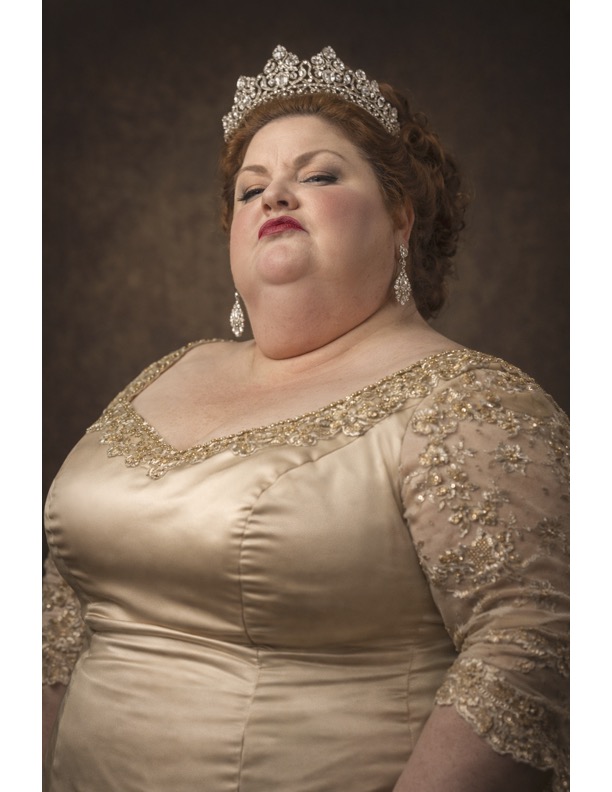
Alberta was in her element presiding over these parties. She sat in her red velvet wingback, her feet on an embroidered footstool, a Waterford crystal glass of eggnog in one hand and a box of Russell Stover chocolates at her side. She looked like a fat spider in the center of her web.
“Iʼm seeing Mr. Campbell tomorrow,” she announced. Mr. Campbell was her attorney.
“Really?” my father said, trying to sound unconcerned. “Is there anything I can help with? By the way, I brought your digestion pills. They’re in the medicine cabinet.” My father, a general practitioner, served as her personal physician.
“Just a few things Iʼm changing in my will. Donʼt forget to check my blood pressure before you leave. My ankles are swolled up. Maybe I need some water pills, too.”
She inspected a puffy ankle and dented it with her finger.
“Your edemaʼs worse,” my father said. “Iʼll have my nurse drop off a diuretic.”
I wasnʼt crazy about the Christmas parties because they bored me. My cousins and siblings were much younger. The adult conversation didnʼt interest me, so I helped myself to the eggnog and got drunk on the back porch that overlooked the magnolia stump.
Although I knew Alberta was not a nice person, I could not help being fascinated by her. I had never known someone so unconcerned with other peopleʼs opinions or feelings. She was a novelty, a legend in her own time. Fortunately, I managed to escape the full brunt of her awfulness–with the exception of the haircut she talked me into getting.
“Youʼll look so much prettier,” she said. “Your hair is too thin and scraggly.” Finally, I agreed to have my long hair cut off into a pixie.
“Oh, my Lord,” Alberta said, afterwards, examining me from all angles. “I do believe thatʼs the worst hairdo I’ve ever seen.”
When I got my driverʼs license, Albertaʼs house served as a place to rendezvous with my boyfriend, David. He was a checkout clerk at the Acme supermarket, and was ten years older. David had a penchant for wearing tight, striped tee shirts, and I thought he looked tres French. I would tell my parents I was going to Albertaʼs to visit, or to do homework. She enjoyed being an accessory to something she knew my parents would never allow. David brought us fried chicken takeout, and the three of us ate while we watched Oral Roberts or discussed the superiority of the Democrats. Then Alberta went off to bed, and David and I had the house to ourselves.
When the Lipizzaner Stallions came to town, Alberta called. “I saw these horses in the paper. I want you to carry me over to see the show.” We sat in the front row and watched the white horses dance and leap through the air. For once, Alberta was speechless.
Afterwards, we toured the stables which were set up under a big tent. People were packed shoulder to shoulder, trying to get closer to the horses. The lights blinked and went out, leaving us in pitch blackness. Startled, the crowd was silent. Then Albertaʼs voice rang out. “Everybody, grab your purses!”
The last time I saw Alberta, I was living in another state and had come back to visit my family. She had recently returned home after being hospitalized for a fractured hip at the age of 98. Her bed had been moved downstairs to the living room, facing the television so she could watch Billy Graham and keep up with the Democrats. She struggled to sit up when she saw me.
“Hello, honey! Iʼm so glad to see you! My stars, thatʼs an ugly frock you have on.” A nurse sat nearby, reading a romance novel. Next to the bed, a walker was parked. A pink plastic bedpan perched on the red velvet wingback.
“Whereʼs my purse? You–whatʼs your name?” she called to the nurse. “Get me my purse. Itʼs on the davenport.” She was never one to say ʻpleaseʼ.
“Mom-Mom, I donʼt need any money,” I said.
“Yes, indeedy, you do. You need to buy yourself a new frock. Howʼs your young man?” She fumbled around in her purse and pulled out a twenty. “Here, take this.” I took it.
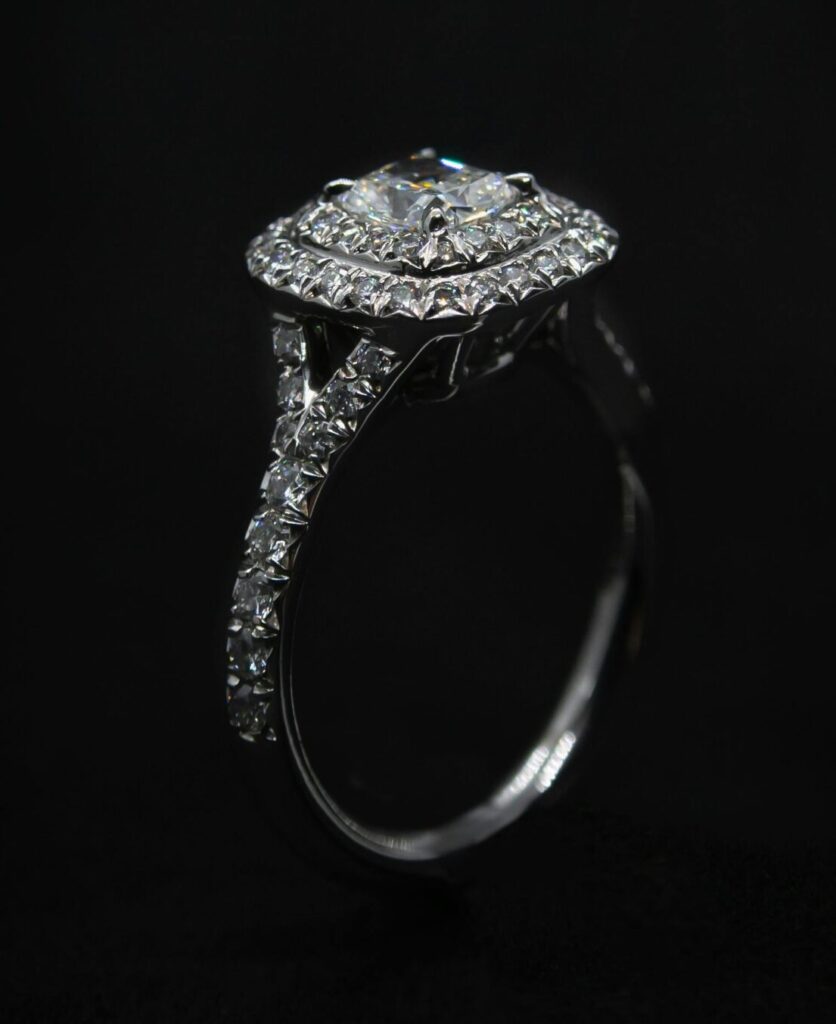
A few weeks later, she died. In her will, she left me her enormous diamond engagement ring. She left my sister a broken wristwatch. Decades later, my sister is still resentful. Alberta would be pleased.