Tierra de San Juan de los Lagos
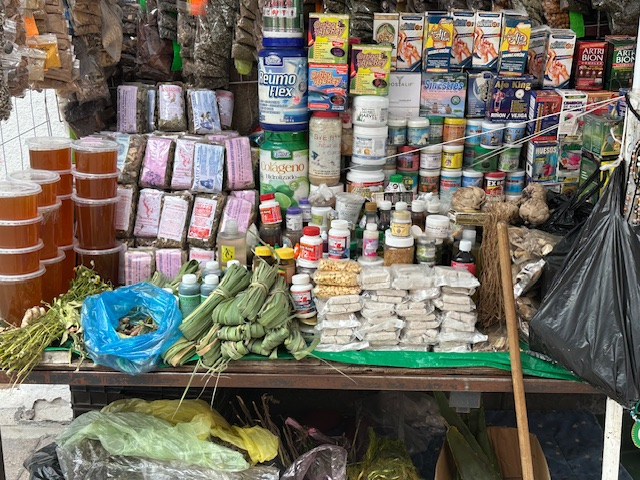
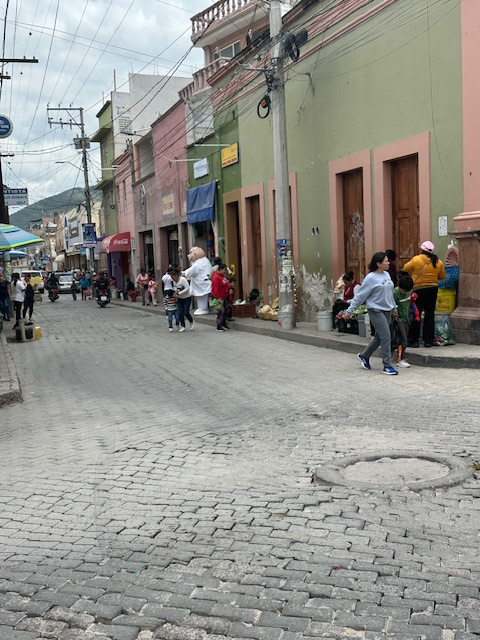
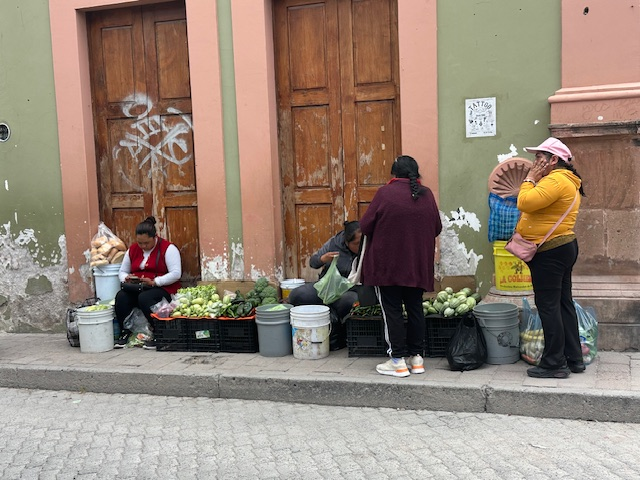
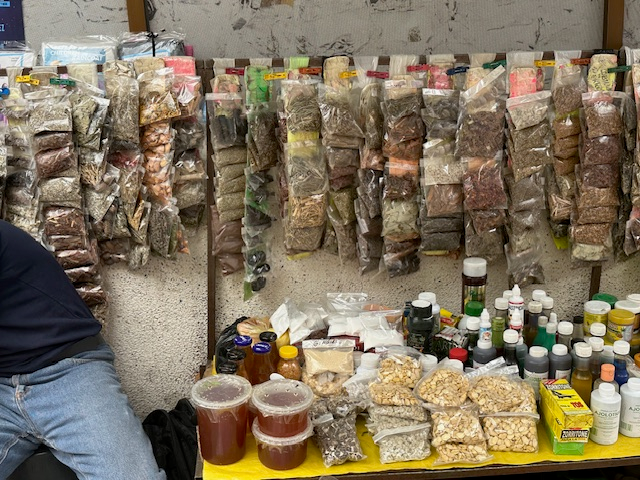
So today I had to go into downtown San Luis de La Paz to run a few errands, and I noticed some light gray squares of what looked like soap being sold by a sidewalk vendor. I’d never seen it before, so I asked what it was. To my surprise, it was dirt! Specifically, “tierra de San Juan de los Lagos.” When I asked what it was used for, the woman selling it told me it was used in cooking. But why would you put dirt into food, I wanted to know? She couldn’t tell me. I asked if it was supposed to cure some illness? She said no. I asked her if she liked the taste. She shrugged and said she did.
I bought a square of it for twenty pesos, which is about one USD. I came home and looked it up. There are other places which are also known for their sacred dirt, but this particular dirt, or clay, comes from San Juan de los Lagos, in the northeast corner of the state of Jalisco. The area was inhabited by native people, the Nahuas and Tecuexes as far back as the 12th century, and then later by the Spanish conquistadores. But it was still only a few houses with an hermitage built by Friar Miguel de Bolonia in the late 16th century, and dedicated to the Immaculate Conception. This is believed to be where an image of the Virgin Mary (made out of sugar cane!) was first brought in the late 16th or early 17th century. Supposedly, moths got into it (do moths eat sugar?) and the image was packed away, presumably to prevent the entire image from being devoured.
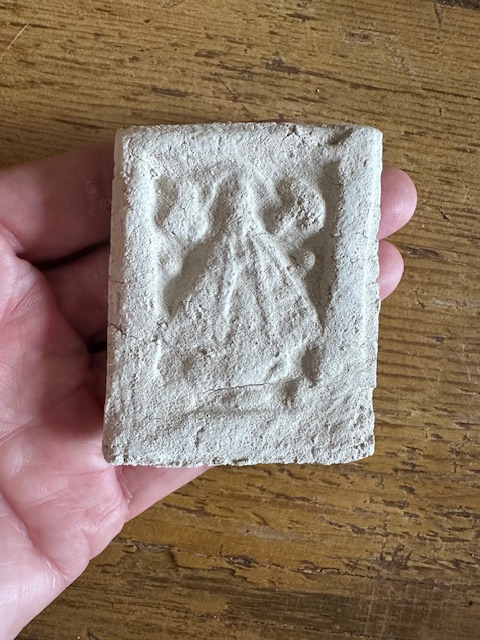
One day, in 1632, a circus came to town, and one of the acts was a family of flying trapeze artists who ‘flew’ over pointed spear tips. One of the children, a seven year old girl, fell onto a spear and died. She remained dead until some local women came with the image of the Virgin Mary that they must have unpacked from wherever it had been stored. And, happy ending, the dead girl was revived! And thus began the pilgrimages to San Juan de los Lagos, which continue today and are a major part of the economy. At some point, the dirt/clay (considered sacred) from around the basilica (built in the 1700s) began to be taken and made into tablets.
Some of the more common uses of this dirt are purportedly for easing childbirth and pregnancies, for digestion, and for arthritis pain. Some sources claim that it can be used as a poultice. Chat GPT says it contains arsenic and lead, and should not be eaten. Taking that into consideration, I think I’ll have to pass on using it in a recipe.
You have to wonder–if all this sacred dirt is being dug up from around the basilica, wouldn’t there be a giant crater? Well, it seems that fresh dirt is trucked in regularly and the hole where the sacred dirt is excavated is refilled. I wonder if they have to let it sit for a certain amount of time in order for it to transform from regular dirt to sacred dirt, or if a priest blesses it, or…what? I guess I will have to visit the basilica in person and speak with someone in the know in order to get the real scoop. Plus, I’d like to see the sugar cane image. Who would have guessed that sugar cane could endure for more than four centuries?
This is one of the things I love about Mexico–all these magical/religious traditions! Since I don’t think I want to chance eating arsenic or lead, I’ll just keep my tierra in the kitchen as a good luck charm.
