Zippy And George
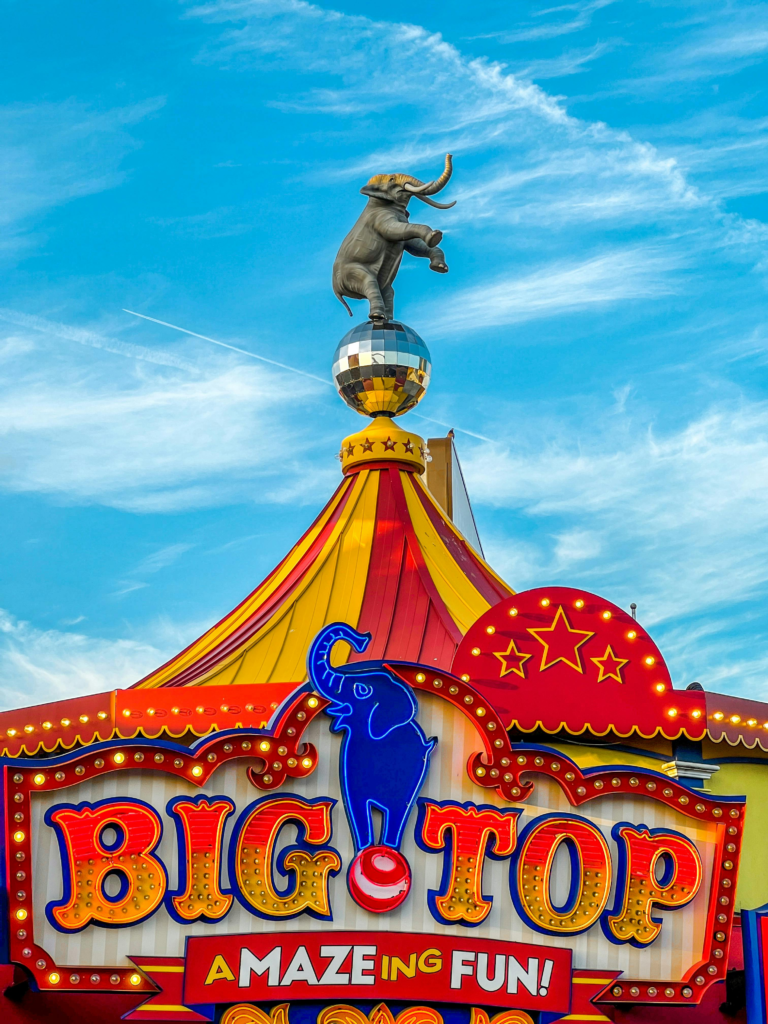
If it weren’t for the little peanut seller, the elephant would have long ago succumbed to insanity. He probably would’ve turned into one of those raging beasts that go psychotic with the unbearable horror of it all. The endless, dreary trudging around under the big top, being forced to do stupid tricks. And, of course, there was not the option of refusing to do the tricks because if you even thought about refusing, if you were slightest bit slow to respond to the circus master’s commands, you could expect the bite of that barbed hook. And even though elephants have thick hides, that hook was none too pleasant, you’d better believe.
The elephant—you can call him George, because that’s his name—was born into the circus life. He’d never known anything different, but yet he sensed, deep in his elephant brain, that this life was all wrong and terribly unjust and that he didn’t belong here. He’d heard a couple of the other elephants talking about what it was like to live in Africa. Not that they actually knew, because none of the elephants in this particular circus had ever been in Africa. But there were other elephants, in other places, who had been in Africa, or at least knew of elephants who had been, and the stories about Africa were passed around from one elephant to another. They told of the yellow African sun, and the shining savannah, and the baobab trees and the mud holes during the rainy seasons. George would have given anything for just one day in Africa. Just one day to live his life as a normal elephant should live. But he was trapped here in this circus with nothing to look forward to but a long string of hideously tedious days with the ever present chain around his leg.
George had tried to think of ways in which he could escape. He fantasized about breaking his chain and running down the nearest city street. He wasn’t sure where he could go though. The best idea he could think of was to maybe hide behind one of those big green dumpsters he had seen on the street. But since he was bigger than a dumpster, that probably wouldn’t work too well. When he asked the other elephants (there were eleven others) for ideas, they just rolled their eyes and ignored him. They’d decided that it was best not to contemplate alternate lives. They felt it made their current reality even more dismal. They liked to talk about Africa, but they never had any hope of actually living there. They had no hope for any alternate existence other than the circus, and so, of course, they were not interested in helping George plan his escape.
George was a bright elephant. He knew that his odds of escape were almost zero, so he didn’t think about it all that much. But still, it was there, in the back of his mind, that tiny little twinkle of hope that had never quite been completely extinguished. One night, after a long day (three sold out shows!) of standing on tiny pieces of furniture and dropping to his knees so that a girl (Clara) in a sequinned costume could climb onto his back (George had never solved the mystery of why humans paid money to see such ridiculous things), George was completely exhausted. He stood in the elephant enclosure, his chain clanking whenever he shifted his weight, and chewed morosely on his dinner of hay. (It was always hay, the circus didn’t believe in the concept of dietary variety) A voice just on the other side of the makeshift fence caught his attention.
“Hey there, George, would you care for an apple?” George blinked and peered into the gloom. A small boy stood there, whom George recognized as Zippy, the boy who walked up and down the stands during the shows, shouting ‘Peanuts! Fresh, hot peanuts! Fifty cents a bag!’
George waggled his trunk in greeting. Zippy liked to stop by the elephant enclosure and watch them eat at the end of the day. He’d noticed that they never had anything exciting to eat, and he started bringing them apples and leftover peanuts. Zippy was quite popular with the elephants, as you might imagine. George wanted to ask him how he got the name Zippy. Maybe it was because he zipped up and down the stands when he was selling his peanuts. George would have liked to ask Zippy lots of things, but he couldn’t because elephants, of course, don’t speak English, and peanut selling boys don’t speak elephant, so there was a definite communication gap. But the thing was, and a very good thing it was indeed, even though Zippy spoke no elephant, he seemed to know just what George was thinking.
Zippy held out a slice of red apple, and George delicately accepted it. An elephant trunk is a remarkable thing, large and unwieldy looking but extremely sensitive. “You know, George, I’ve been thinking,” Zippy said. A small frown creased his brow. Zippy was a slight child, stick-like legs and a pale complexion. George guessed his age to be around ten years old.
George looked at Zippy and telepathically responded, “What have you been thinking, Zippy?”
“I’ve been thinking,” Zippy continued, “that neither of us really belong here. Do you know what happened to my mother?”
“No,” George said, again telepathically. “Do you know what happened to mine? I haven’t seen her for years. She was sold to a zoo in Minneapolis when I was only two.”
“Well,” continued Zippy. “In case you don’t know the story, my mother was a trapeze artist in this very circus. She was very talented and people would come just to watch her. She was very beautiful as well. My father was a trapeze artist too, and they worked together, soaring through the air at impossible heights with the greatest of ease.” Here Zippy gestured dramatically, revealing a bit of a flair for showmanship.
George had heard bits and pieces of the tragic story of Zippy’s mother, but he’d never known if it were true, or just typical circus gossip and exaggeration. “So, what happened,” he asked (again, telepathically. Whenever George speaks, you may assume that he is speaking telepathically).
Zippy bit his lip. “You know, I’ve never really spoken about this with anyone. I hope you don’t mind? It feels good to tell someone.” George didn’t mind. He probed Zippy’s pocket gently with the tip of his trunk, hoping to find a stray peanut. “The thing is, when a woman is as beautiful as my mother was, it can cause problems. Obviously, I only know this because people have told me. I’m too young to really know much about women, although I do like them.”
“I like them too,” George said.
“So, in addition to my father being in love with my mother, because she was so beautiful, there were other men who were in love with her, too. And one of these men became angry, because she wouldn’t return his love. That’s the story I heard anyway, from more than one person. I was only a baby at the time, so I wasn’t aware of any of this.”
George nodded and tried to look sympathetic. Elephants don’t really have the right facial muscles to look sympathetic, but George tried his best.
“And the terrible thing that happened on the night my mother died, was that this angry man was part of the trapeze act with my mother and father. And he missed catching her during their act. They always worked without a net, so she fell and died. People whispered about it. They said she’d been murdered. But you can’t prove something like that, you know?”
“That’s awfully sad,” George said. “I’m so sorry.”
“It was a terrible thing, but since I was just a baby, I really never knew her. Then my father left the circus and just sort of abandoned me. I’ve been raised by the fat lady. You know the fat lady?”
“Not personally,” George said, “but I’ve seen her around. She is quite large.”
“The fat lady has been good to me,” Zippy said. “She’s done her best to take care of me and I think it’s fair to say we are fond of one other. But she’s not my actual mother, you know? And even though this is the only home I’ve ever known, I don’t think I belong here.”
“I know the feeling,” George said.
“So I’ve decided to run away from the circus. That sounds like a joke, doesn’t it?” Zippy smiled but it didn’t reach his eyes. “Most kids run away to join the circus. But I’d like to run away to a normal life, where I went to school instead of selling peanuts. Where someone tucked me into a real bed at night. And I’d have to be in bed by 9 pm. The fat lady doesn’t give me a bedtime; she says to go to bed whenever I’m tired. Not that I even have an actual bed—it’s just a cot and a sleeping bag in the corner of the fat lady’s tent.”
“Do you call her the fat lady? I mean, does she have a name?” George asked.
“I don’t call her the fat lady, by the way,” Zippy said. “I call her Dora, because that’s her name. But everybody calls her the fat lady, and she doesn’t seem to mind.”
George wondered why Zippy was telling him this story and if there was a point he was getting to.
“I’m telling you this, George, because I feel as though you are a kindred spirit—like you dream about a different kind of life, also.” Zippy looked at him expectantly.
“I do!” said George excitedly. “I dream about living in Africa!”
“So I’m taking you with me. I found out that I have a distant relative who lives in Kansas. She’s sort of a cousin of my mother’s and she tracked me down. She invited me to go live on her dairy farm. I didn’t tell her that I’d be bringing you with me, but I don’t think she’ll mind. I haven’t told anyone here at the circus that I’m leaving. Not even Dora. She’d probably start crying or something.” Zippy pulled a key out of his pocket and bent to unlock the chain around George’s ankle.
“What? Seriously? How will we get to Kansas?” George was excited and panicky all at once.
“We’ll just walk along the highway all night, in the dark,” Zippy said. “And we’ll sleep during the day, behind some trees or something. Kansas doesn’t look like it’s that far on the map.”
And just like that, Zippy and George walked off the circus grounds, unnoticed by anyone in the deep blue shadows of late evening, and they walked all night, and slept in a small woods during the day, and walked most of the next night and just before sunup of the second day they walked into the state of Kansas and a new life for both of them. And even though Kansas is not Africa, it sure beats the circus. And George and Zippy lived happily ever after and Dora the fat lady eventually joined them and was hired as a milkmaid. She turned out to have a real aptitude for working with bovines.