The Candy Connection
The Bittersweet History of Biznaga: From Sacred Plant to Endangered Species
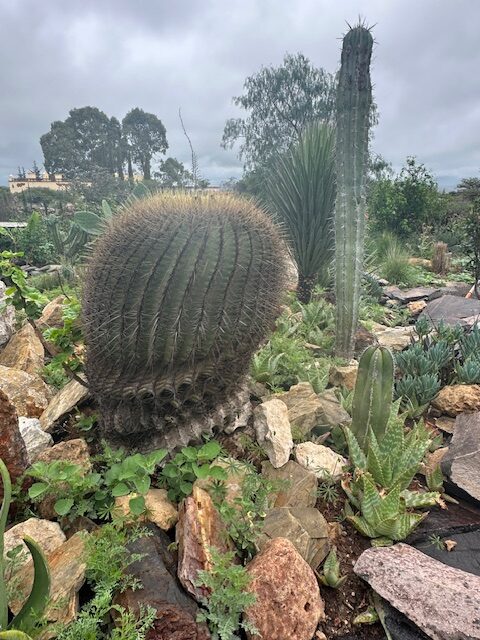
The biznaga cactus is an example of the complicated relationship between human culture and the natural world. For centuries, these cacti have provided food, medicine, and cultural meaning to the native people of Mesoamerica. Unfortunately, they are now facing extinction because they are the main ingredient in acitrón candy.
Long before European ships appeared on the horizon, the indigenous people of what is now Mexico were using the biznaga cactus as an important resource. Archaeological evidence indicates that human use of these cacti dates back at least nine thousand years (!), with carbonized cactus remains found in ancient sites in central Mexico. The Aztecs (Mexica) incorporated them into their cosmology, medicine, and daily food. In Nahuatl, the language of the Aztecs, these cacti were called “huitznahuac,” meaning “surrounded by thorns”. Early colonial accounts record their use.
In Aztec religious practices, the biznaga symbolized the sun deity Huitzilopochtli due to its rounded shape and thorns that extend like rays of the sun. During agricultural ceremonies, biznagas were placed on altars as offerings, where they represented cosmic balance and the cycles of life. But, maybe even more importantly, these cacti had practical uses.
Food Source
In a drought prone environment, the high water content in the biznaga pulp was an emergency water source. Indigenous people harvested the pulp of Echinocactus platyacanthus (the species most commonly used historically) and other large barrel cacti species, either eating it fresh or drying it for preservation. During lean times, the dried cactus pulp could be rehydrated and used to prevent starvation.
Medicinal Applications
Pre-Hispanic healers used every part of the biznaga. The pulp was applied topically to reduce inflammation and treat wounds, while other preparations were used internally for digestive ailments and as a diuretic. The juice extracted from the cactus was used for treating kidney problems and urinary tract infections, uses that continue in traditional Mexican medicine today.
Practical Tools
The curved spines of biznaga were used as needles and fishhooks, while the woody skeleton left after a cactus died came in handy for making small containers and ceremonial objects. Even the seeds were ground into flour when other food sources were scarce.
Spanish chronicler Bernardino de Sahagún, in his work “General History of the Things of New Spain” (also known as the Florentine Codex), documented how the Aztecs harvested biznagas, carefully cutting away the spines before extracting the inner flesh. This harvesting process, when done traditionally, allowed the plant to regenerate (they were farming sustainably long before it became fashionable). It takes about 50 years for one biznaga to mature and reach reproductive age. The Mexican government declared harvesting wild biznaga to be a federal crime in 2003. But they didn’t criminalize the selling of acitron so I’m not sure how much of a deterrent that law is.
Colonial Transformation: The Birth of Acitrón
The Spanish conquest of Mexico beginning in 1519 was the start of major changes in how biznagas were perceived and used. While the indigenous populations had valued the cactus for its practical and ceremonial uses, Spanish colonists and missionaries saw culinary potential that would eventually transform the biznaga’s cultural significance.
Spanish Candy Makers Meet Mexican Ingredients
Spanish colonizers arrived with an appetite for sweets as well as sophisticated European confectionery traditions, including candying techniques that had been refined over centuries. These methods had been developed around citrus fruits, especially citron (the thick-rinded fruit of Citrus medica), which was preserved in syrup to create a sweet treat that was popular in the Mediterranean.
Since their usual ingredients weren’t available in the New World, Spanish confectioners experimented with native plants. The flesh of the biznaga cactus—particularly Echinocactus platyacanthus (Mexican barrel cactus)—proved an ideal substitute for citron due to its:
- Firm, fibrous texture that didn’t fall apart during candying
- Mild flavor that absorbed sugar and spices
- Translucent appearance after boiling
- Wide availability throughout central Mexico
By the mid-16th century, Spanish confectioners and Mexican cooks had developed the technique for creating what would come to be called “acitrón” or “dulce de biznaga”—candy made from the crystallized pulp of barrel cacti. The name “acitrón” itself points to its origins as a substitute for citron.
Traditional Preparation Process
The traditional method for creating acitrón is labor-intensive and time-consuming:
- Mature Biznagas (typically Echinocactus platyacanthus specimens at least ten to fifteen years old) are harvested, and their spines carefully removed.
- The outer green skin is peeled away to reveal the white, juicy inner flesh.
- This flesh is cut into cubes or rectangular pieces approximately two inches across.
- The cactus pieces undergo a preliminary boiling to remove any bitterness and soften the tissues.
- The parboiled cactus is then immersed in a heavy sugar syrup, often flavored with cinnamon, anise, or other spices.
- Through repeated boiling and cooling cycles over several days, the sugar gradually infuses the cactus flesh completely.
- After complete saturation, the candied pieces are dried until they develop a semi-crystallized exterior while maintaining a somewhat jellylike interior texture.
- The finished acitrón has a translucent, amber color, and is chewy but tender
Colonial-era convents became confectioners as a side hustle, and nuns throughout New Spain (Mexico) were famous for their sweets and preserves. The convents’ recipe books, some of which still exist today, document how acitrón production evolved during the colonial period.
Cultural Integration: Acitrón in Mexican Culinary Tradition
By the 18th century, acitrón was not just a European thing–it had become part of Mexican cuisine. They used it for candy, but they also integrated it into traditional dishes, particularly festive foods associated with Christmas and other celebrations. One of the most famous uses of acitrón is in the Rosca de Reyes (Kings’ Cake), the ring-shaped pastry served on January 6th to celebrate Epiphany. Traditional recipes call for strips of acitrón to be placed on top of the bread as decoration, representing the jewels in the crowns of the Three Kings. It’s also commonly used for wedding cakes. The presence of acitrón in these contexts elevated it to a status symbol of sorts—an indication of a cook who could properly execute a traditional recipe. You can also find acitron in a more savory dish, chiles en nogada (poblano chiles stuffed with a meat and fruit mixture, topped with walnut sauce and pomegranate seeds). In this recipe, acitrón is included in the picadillo (filling) to provide subtle sweetness and texture.
Regional Variations
Different regions of Mexico have specific local traditions for acitrón. In Puebla, it became an ingredient in crystallized fruit assortments called “dulces cubiertos.” In Oaxaca, it was used in regional versions of marzipan. Throughout central Mexico, small acitrón cubes were added to traditional cookies, cakes, and fruit compotes. By the time of Mexico’s independence in 1821, acitrón was not just a colonial adaptation, but a national culinary treasure, with production techniques handed down through generations of confectioners and home cooks.
Environmental Impact: From Sustainable Harvest to endangerment
For centuries, biznaga harvesting maintained a relatively sustainable balance. Traditional harvesters (known as biznagueros) followed practices that allowed for regeneration:
- Taking only mature specimens
- Harvesting selectively from abundant populations
- Allowing portions of harvested plants to continue growing
- Ensuring seed dispersal from mature cacti before harvest
However, this equilibrium shifted in the 20th century due to:
Industrialization of Production
As demand for acitrón increased along with the population, and commercialization of traditional foods increased, harvesting methods became more destructive. Rather than careful extraction of the cactus flesh, entire plants were removed from their habitat, preventing any possibility of regeneration.
Habitat Destruction
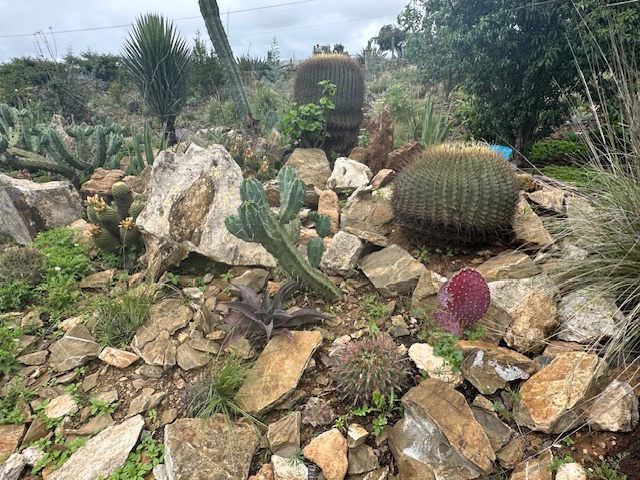
The central Mexican highlands—which is the primary habitat for Echinocactus platyacanthus and related species—saw substantial development and agricultural expansion in the 20th century. Urban growth, farming, and ranching all added to habitat disruption and loss, making it even harder for wild biznaga populations to survive. The basic problem facing biznaga conservation lies in the plant’s extremely slow growth rate. They are harvested faster than they can reproduce. Echinocactus platyacanthus, the main species used for acitrón, takes fifteen to thirty years to reach a harvestable size and can live for over a century in ideal conditions. In fact, in Valle de Tehuacan, Puebla, you can find what is supposedly the largest biznaga in the world. It’s over nine feet tall and estimated to be between 1000-1500 years old! One day, I hope to see it in person.
Protected Status and Ongoing Threats
By the late 20th century, it was clear that biznaga populations were in trouble. In response, Mexico established legal protections:
- In 1991, Echinocactus platyacanthus was listed in the Official Mexican Standard NOM-059-ECOL as a threatened species.
- In 1994, it was placed under international protection ( CITES–Convention on International Trade in Endangered Species).
- By 2010, its status was upgraded to “subject to special protection” under Mexican environmental law.
Despite these measures, illegal harvesting is still a problem, because of the high price of authentic acitrón. A kilogram of genuine biznaga candy can sell for more than $100 USD, so, like anything else, if there is a high economic incentive for poaching, it will be difficult to stop. It is estimated that thousands of biznagas are still harvested illegally each year, mainly for acitrón.
Alternative Ingredients: Preserving Tradition While Protecting Species
As awareness of the biznaga’s endangered status grew, chefs, confectioners, and home cooks started to look for alternatives that could provide similar culinary properties. Two plant-based substitutes that are now being used are:
Jicama (Pachyrhizus erosus), a turnip-like root vegetable native to Mexico, has a crisp texture and mild flavor that is similar traditional acitrón after processing.
Chilacayote (Cucurbita ficifolia), a type of squash sometimes called “fig-leaf gourd” or “Malabar gourd,” is another popular substitute. Some commercial producers now label their product as “acitrón de chilacayote” to differentiate it from the endangered cactus version.
Culinary Innovation
Beyond direct substitution, some chefs and food historians see this situation as an opportunity to use their imaginations. Instead of trying for a perfect imitation of acitron, they are creating new recipes that honor the cultural significance of dishes traditionally containing acitrón yet use a more sustainable option. For example, some contemporary versions of chiles en nogada use candied green papaya or young coconut meat in place of acitrón.
Conservation Efforts and Sustainable Futures
As the biznaga continues to be in danger, various organizations are trying to help. Botanical institutions throughout Mexico maintain living collections of cacti species, including Echinocactus platyacanthus. The National Autonomous University of Mexico (UNAM) and the botanical garden at Chapultepec have ex-situ conservation programs, which they hope will save the genetic diversity that would otherwise be lost as wild populations dwindle. Research institutions are looking into methods for commercially cultivating biznaga cacti. New plant propagation techniques may result in quicker growth. I have to wonder though–would these techniques involve genetic modification? I am guessing that they would. I also wonder–if science can create ‘’lab grown meat”–not that you’d ever catch me eating any of it–why can’t it create a lab grown acitron? Or better yet, why can’t Mexico simply cultivate the citrus trees that the OG acitron was made from, back in Spain? Citrus grows very well in Mexico.
Community-Based Conservation
In some areas, communities that used to rely on (illegal) biznaga harvesting are now involved in conservation efforts. Programs in states like San Luis Potosí and Hidalgo have trained former harvesters as conservation rangers and ecotourism guides, creating alternative livelihoods while protecting remaining cactus populations. It would be fantastic if that were possible everywhere–time will tell, I suppose.
Conclusion: The Future of an Ancient Relationship
The story of the biznaga cactus—from its ancient, almost godlike past, to a colonial candy, to its current state of questionable survival—represents the tensions between cultural traditions and environmental sustainability. To paraphrase: You can’t have your biznaga and eat it, too.
It’s encouraging to know that there is a growing movement of folks working to figure out a way to honor traditions while making sure that the cacti remain for generations to come. I hope they succeed! I’m curious to see what turns up on soon-to-be-made excursions to some local markets. Will I find genuine acitron candy? Or only candy made with the sustainable substitutes? I’ll be posting an update with my findings!