Agave Americana
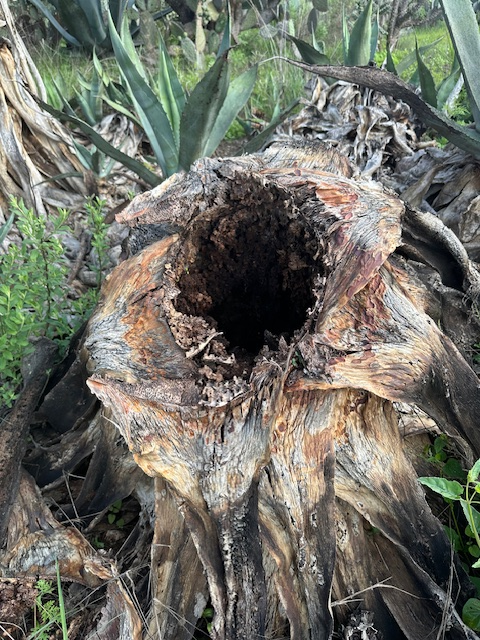

Agave americana are native to the southwest USA and Mexico. They’re also known as century plant, maguey, and American aloe. They are very common here in central Mexico, and pop up everywhere. I had several taken out when I first moved in because there were so many, and they were taking over the entire garden! They can spread via ‘pups’, which are offshoots that come from the parent plant, or from seeds. They bloom only once and then the entire plant dies (monocarpic). Even though they are called ‘century plant’, they usually bloom at around thirty years old, although this can vary. When I was out walking one day, I was struck by how beautifully textural the dead stumps are.
The stalk can reach up to thirty feet, and has small yellow flowers that spread out in horizontal panicles. Bats are the main pollinators, meaning that this is a chiropterophilous plant (I do see lots of bats flitting around at twilight; I’m not sure what species they are). I’ve also noticed lots of different birds perched on the flowers, either for nectar or seeds.
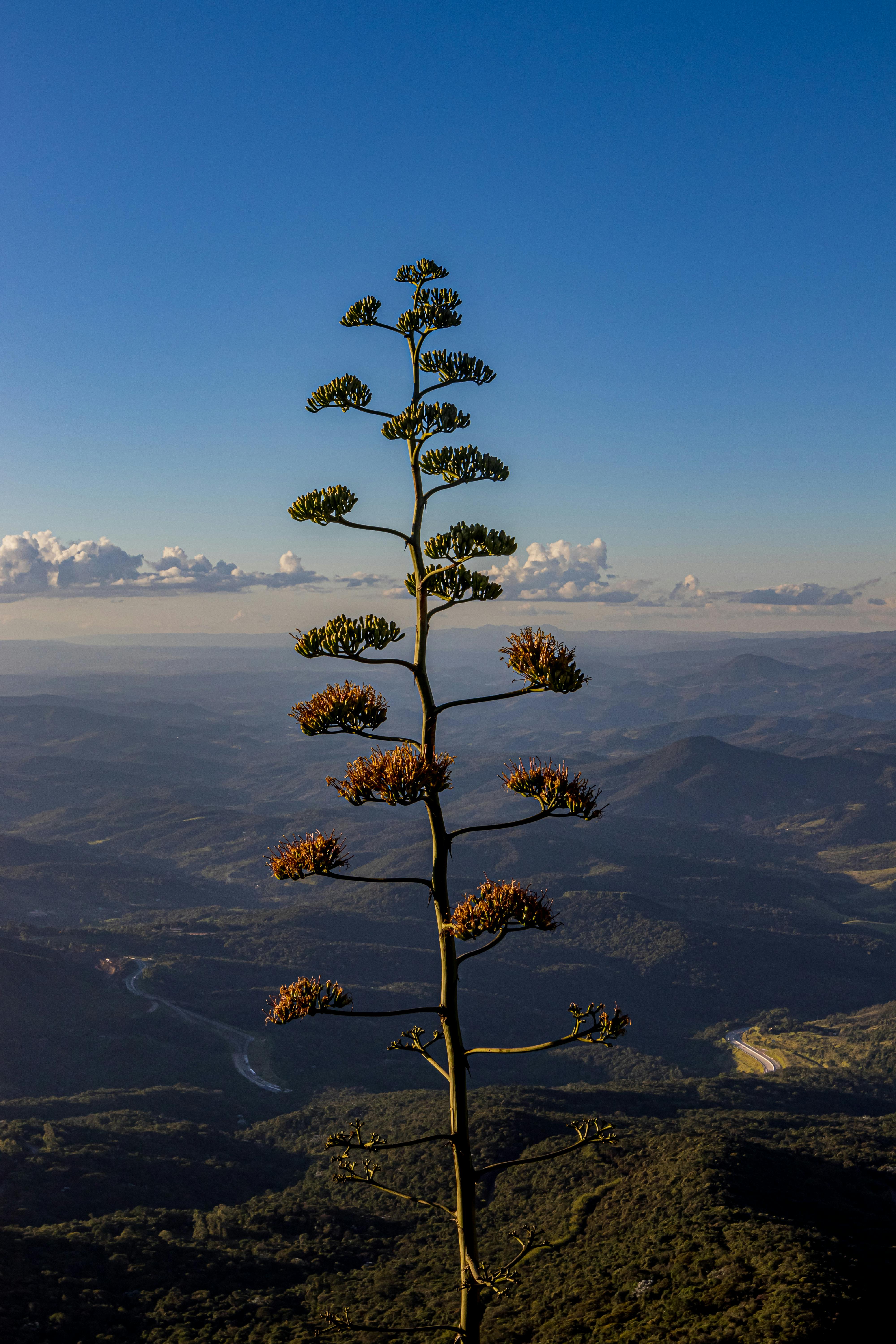
Locals have told me that the stalk is edible–just like asparagus–and it totally looks like a gigantic asparagus spear, which isn’t surprising since both belong to the same family–asparagaceae. Boiling or roasting are two ways it can be prepared, and supposedly the flavor is sweet, similar to molasses. I will get around to tasting one, eventually, I hope. If they could somehow be frozen, or dried, just one stalk would easily last for several years worth of meals. Some traditional uses of the leaves involve making rope and fabric from the fibers. Leather goods and saddles are embroidered with thread made from the fibers–a technique called ‘piteado’. Another way that I have seen the leaves used is for serving salsa or guacamole–they make a very unique serving platter. And, of course, mezcal is made from this agave (and from other species as well). Another field trip awaiting me!
An agave recently died in my front yard. I wish it had lasted longer, because I loved the spot that it was in, and it made a striking silhouette against the sunrise. I hired two men to come remove it–large agaves are tricky to remove because the sap from the leaves is very irritating to skin, plus they have wicked points on the tips of each leaf (sometimes I put wine bottle corks on the tips if they are in a location where they’re likely to stab passersby). It took the men two full days to get that plant completely removed! I’ll probably always keep one or two of these agaves in the garden, because they are so majestic, but I doubt if I’ll ever keep more than that (I give the pups away) because they are so expensive to remove. The smaller ones, like the artichoke agave (Agave parryi) are just as interesting and much easier to manage, since they only reach two-three feet in height.


