Magical, Medicinal Mallow
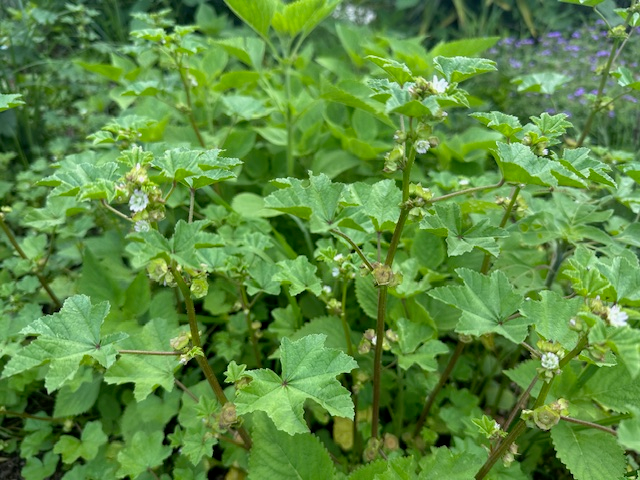
happy mallow cluster
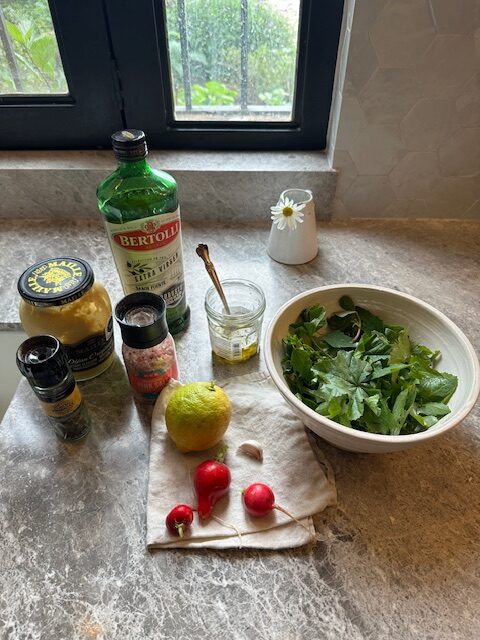
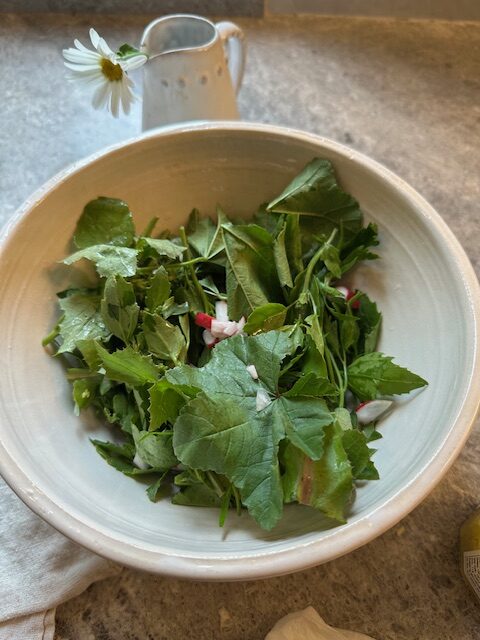
This plant is so interesting that it deserves its own post, where we will delve into its uses other than food (it will be included in a future edible weeds post). Not only can you toss it into soups and salads, but it is also medicinal and magical! I pulled up one of about a billion mallow that I have growing in the garden, and I now have the root, stems and leaves soaking in vinegar water (you never know what the dogs have peed on around here–most likely everything). I am making a salad for dinner tonight with mallow, goosefoot, wild arugula, purslane, and dandelion leaves–all plucked from the garden (I added radish, but what would make this salad divine would be homemade sourdough croutons and shaved Parmesan cheese–maybe a handful of chopped scallions). The nutritional profile of mallow is remarkable; it contains vitamins A, B, C, magnesium, potassium, calcium and zinc.
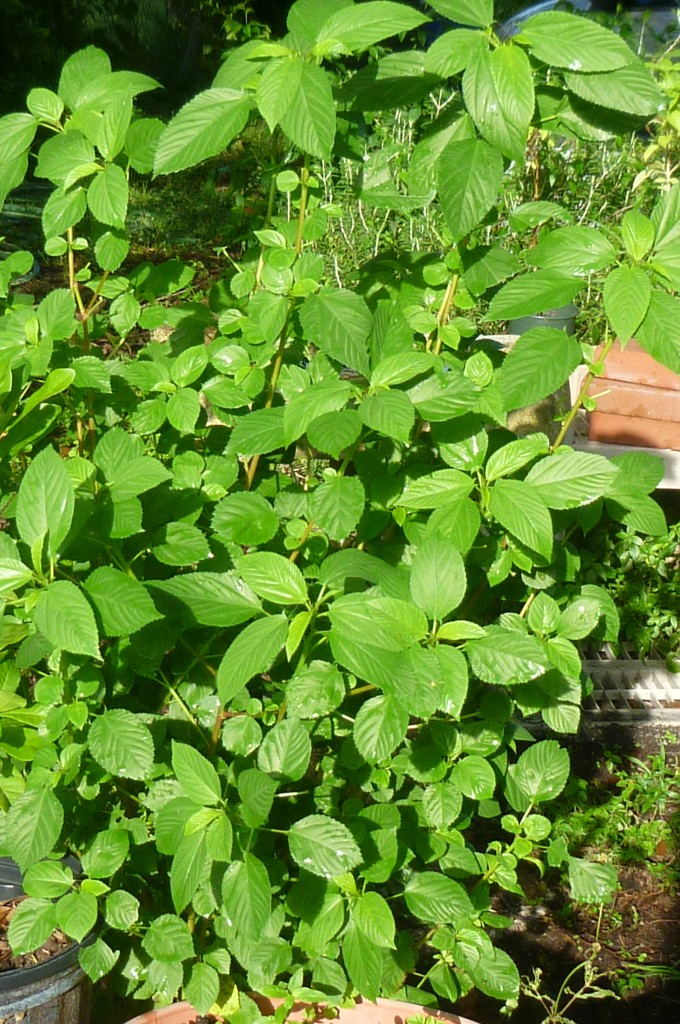
Historically, mallow has been used for millenia. It’s mentioned in the Bible as well as in literature and poetry, and has long been used as a famine food. The word ‘mallow’ translates to ‘food’ in both Hebrew and Arabic. In China, the roots are commonly used in soups, and in Egypt the leaves are used to make Melokhia, a famous regional soup (the family name, Malvaceae, comes from the Greek word ‘malake’, which means ‘soft’, which is obviously how the soup came by its name) Melokhia traditionally uses Corchorus olitorius, known by a variety of common names such as Jew’s mallow and Egyptian spinach. I’ve ordered some seeds from an organic grower (The Unruly Gardener–https://www.theunrulygardener.com) in Florida, and hope they will flourish here, but meanwhile, I am going to substitute my Malva neglecta leaves, and plan to make this soup soon. The Jew’s mallow leaf looks more like a mint leaf–much narrower than the rounded leaves of Malva neglecta.
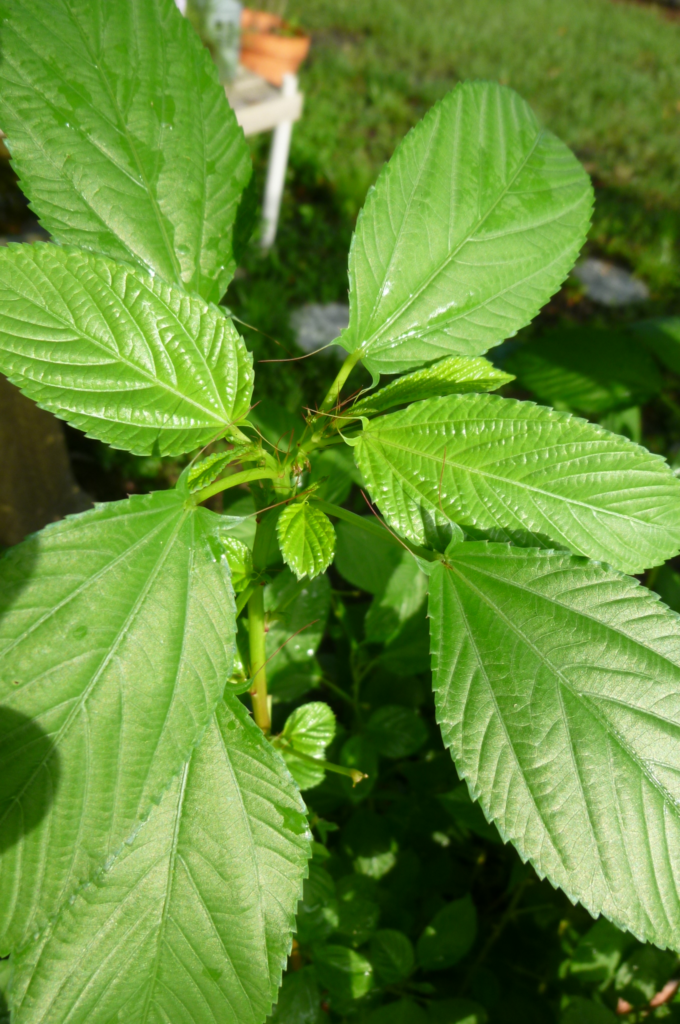
The mallow plant originated from Europe, north Africa, and western Asia. It’s now widely naturalized throughout the Americas and Europe. It can be a bit confusing because Malvaceae is the family that includes both the Althaea and the Malva genus. (I once had a biology teacher that gave us this mnemonic sentence– ‘King Philip Came Over For Good Spaghetti’, which helped us to remember the correct order of classification–Kingdom, Phylum, Class, Order, Family, Genus, Species) Althaea is the plant that marshmallow was made from (today it’s usually made from sugar, corn syrup and gelatin), and as the name implies, they grow in wet, marshy areas. Malva is the genus that you probably have somewhere in your garden. They share similar properties, but the Althaea is considered more potent. We shall have to make do with the lesser one, the Malva genus. I think that the species I have is Malva neglecta–I just went out to see if any had flowered, and a few were beginning to bud out into a pale pink flower. Malva sylvestris has a darker rose colored flower. But there are thirty to eighty-one species of Malva, depending on which botanist you ask, so I’m not 100% sure what species this is. Let’s just go with neglecta.
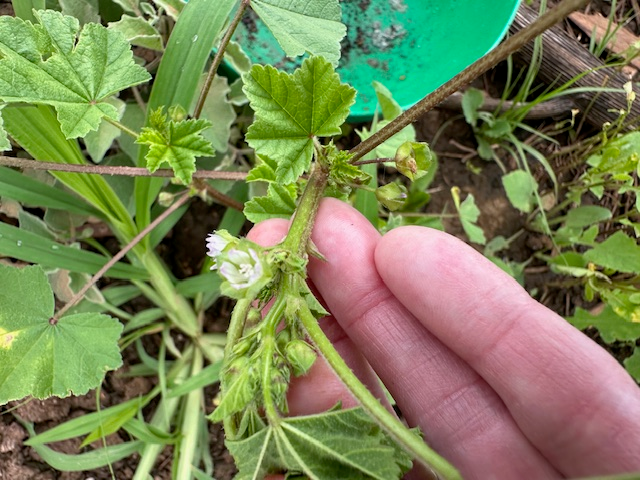
Malva neglecta ?
Onto the medicinal uses: (FYI The medicinal uses mentioned here are NOT medical advice)
The leaves have a high mucilage content. If you crush a leaf between your fingers it will feel slimy. This mucilage supposedly soothes mucous membranes throughout the digestive tract. Ulcers, gingivitis, irritable bowel syndrome, sore throats, etc. It also is a mild diuretic, an expectorant, and a decongestant. As if that isn’t enough, it’s a liver detoxifier and remedy for heartburn and insect bites, a mild sedative/sleep aid, a cure for constipation, and a topical antiseptic. It would be easier to list the ailments it’s NOT used for. We might live forever if we just eat a handful every day.
Beauty uses: Soaps, shampoos, bubble baths, toothpaste, and skin lotions. I have never noticed mallow in the grocery or health food stores, but I googled, and sure enough–many companies sell it. Weleda even has a line of mallow baby products, including baby shampoo and baby lotion. I’m going to put some leaves in my vitamix blender with rosemary water and make a face and hair mask. Will report back with my results!
Another genus/species, Sphaeralcea angustifolia also pops up everywhere in my garden, and although it isn’t used much for culinary purposes (the leaves are reportedly bitter–I haven’t sampled them) they do have a history of being used for gastrointestinal disorders in traditional Mexican medicine. If you’d like to read more, here is a link to the National Library of Medicine. https://pmc.ncbi.nlm.nih.gov/articles/PMC9867394/
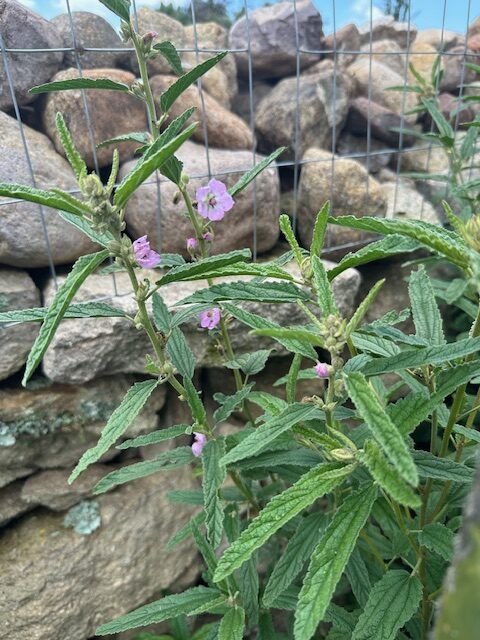
Sphaeralcea angustifolia
And now for the magical properties! The flowers are said to protect against negative energy and malevolent spirits, and also to attract love into your life or strengthen existing love relationships. Who knows when folklore like this begins, but in the case of mallow, the history goes back at least as far as Pliny the Elder (79 AD to 23 AD), and probably earlier. He claimed that the seeds and roots of the mallow are an aphrodisiac and also a cure for erectile dysfunction. At least that’s how I interpreted it. Here’s what he said:
“Mallow seed is attached to the arms of patients suffering from spermatorrheoea; and, so naturally adapted is this plant for the promotion of lustfulness, that the seed of the kind with a single stem, sprinkled upon the genitals, will increase the sexual desire in males to an infinite degree, according to Xenocrates; who says, too, that if three roots are attached to the person, in the vicinity of those parts, they will be productive of a similar result.”
I was not familiar with the term ‘spermatorrheoea’ so I asked AI. Here’s what it said:
“Spermatorrhea is a term, now largely considered outdated, that refers to the excessive, involuntary emission of semen without orgasm or erection. Historically, It was associated with a range of symptoms including fretfulness, memory loss, loss of courage, and hypochondria, according to historical medical texts. Treatments in the past included methods like straight-jackets, cauterization, and even genital constriction with chastity belts.”
Yikes! Pretty brutal. If anyone, male or female, decides to test the aphrodisiacal claims of Pliny, I’d be interested in hearing your results (no details, please, just positive or negative). I’m considering ordering Naturalis Historia, which is Pliny the Elder’s work (ten volumes) covering topics such as astronomy, geography, plants, animals and minerals. Who knows what other tantalizing trivia might be discovered there?
.


