Sizzling survivors–best trees for desert climates
If you live in the desert, you probably want as much shade in your garden as possible. I know I do (with the possible exception of the vegetable beds–but even there, some dappled afternoon shade would be beneficial). When I first moved here, three years ago, there were only three shade trees, two of them Mexican peppers, and one Peruvian pepper. It was daunting to look at my garden back then, which wasn’t exactly a garden. It was mostly an acre of sun baked gravel. One of the first things I did was plant trees. I planted American redbuds, which reminded me of my childhood home in Delaware. They were dead in less than a year. I planted quince trees. They were dead in six months, and so were the pawpaws, which I desperately wanted because I am obsessed with this native American tree (I have yet to sample the fruit). I planted a sassafras tree which hung on for almost two years before it finally threw in the towel during a particularly brutal hot and dry stretch. (Update: I just scratched off some bark on the sassafras tree, and it’s green underneath! Maybe all is not lost.)
Now, I focus on the tried and true species that I see growing and thriving in this environment. I have had some success with trees that I haven’t seen locally, and I’ll list these as well, but the jury is still out on their long term survival. I will be posting more in-depth information about some of these trees in the future, as well as a post on fruit trees and conifers, but to get you started, here is an overview of unfussy trees that do well in this climate with minimal care. This is not an exhaustive list, by any means, but they are trees that are successfully growing in my garden.
1. Mesquite (Prosopis)
2. Mexican Pepper (Schinus molle)
3. Brazilian Pepper (Schinus terabithia)
4. Olive (Olea europaea)
5. Jacaranda (Jacaranda mimosifolia)
6. Eucalyptus (Eucalyptus cinerea)
7. Acacia (Acacia baileyana, Acacia decurrens?)
8. New Mexico Privet (Foresteria neomexicana)
9. Honey Locust (Gleditsia triacanthos)
10. Crape Myrtle (Lagerstroemia indica)
11. Huesos de Frailes (Thevetia peruviana)
12. Palo Verde (Parkinsonia aculeata)
13. Liquidamber (Liquidamber styraciflua)
14. Red Maple (Acer rubrum)
15. Gingko (Gingko biloba)
16. Elm (Ulmus parvifolia)
17. Hackberry (Celtis occidentalis)
- Mesquite
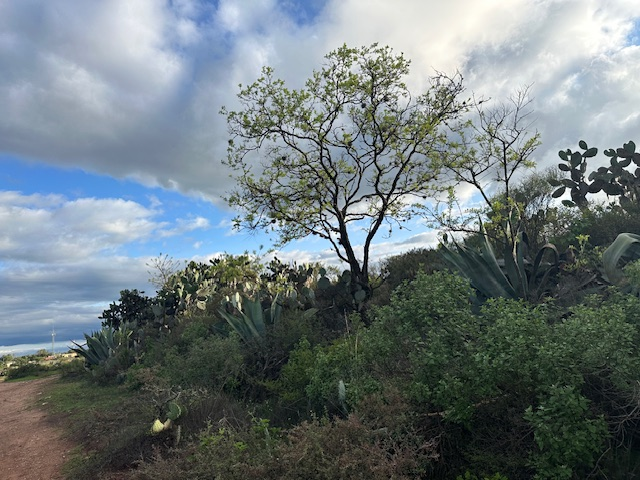
I love this graceful mesquite.
Over forty species exist worldwide. They can live for one hundred years, and can grow up to fifty feet tall with a forty foot spread. I’ve never seen one that tall; they tend to max out at ten to fifteen feet in the countryside here. They’re said to grow taller and more rapidly with water, which I’m sure is true. The common types found in Mexico are the velvet mesquite (Posopis velutina), the screwbean mesquite (Prosopis pubescens) and the honey mesquite (Prosopis glandulosa) I think the latter is the one seen most commonly in my area (I can’t identify any species with certainty, because there are so many hybrids). They have long brown seed pods that can be made into flour–maybe I will try that one day. I don’t have any large mesquites in my garden, but I do have tiny ones that sprout up and they also live in the vacant lot next door. These trees are maligned as trash trees because they are so common and reseed easily, and also because they have thorns and often look a bit scrubby. But with water (just a little) and some selective pruning, I think they are very attractive. And they are absolutely indestructible.
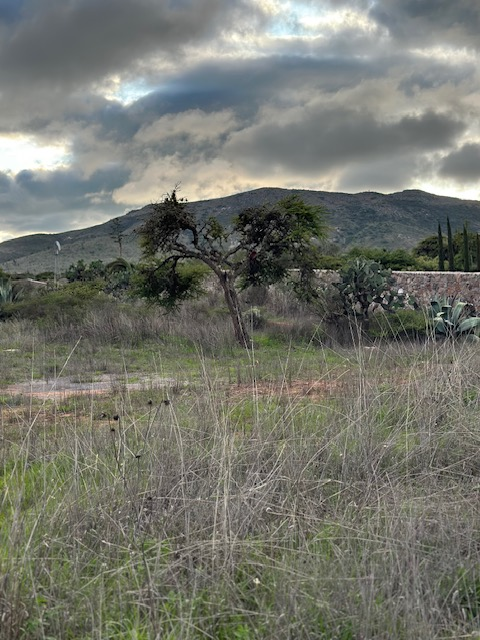
This poor tree has had several branches hacked off by someone collecting firewood. It reminds me of the book by Shel Silverstein, The Giving Tree.
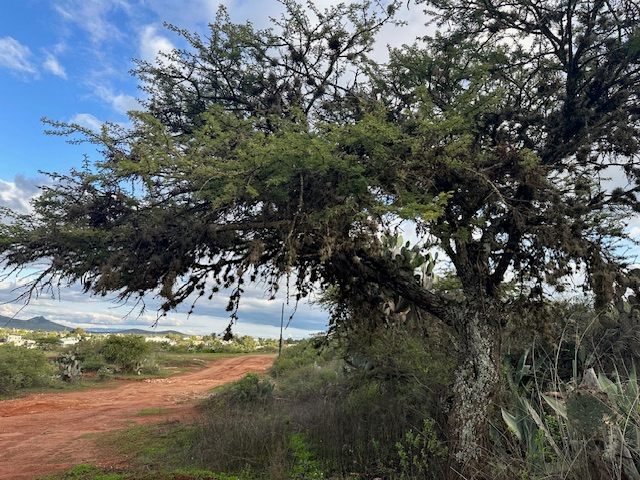
mesquite on the trail
- Mexican Pepper Tree (Schinus Molle)
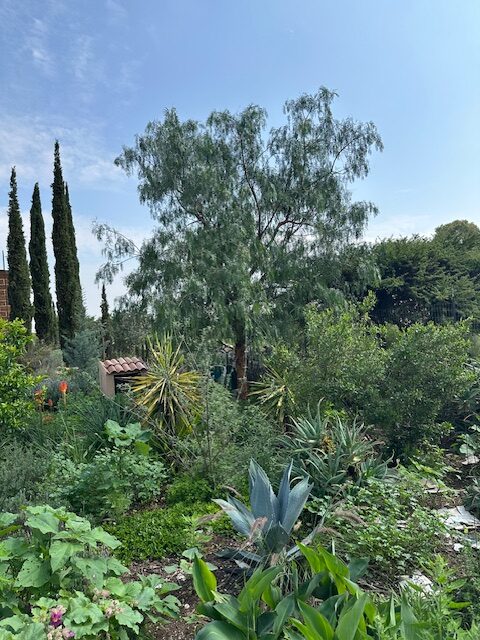
pirul in back garden
These trees are also known as California pepper, Peruvian pepper, Peruvian mastic, false pepper, rose pepper and pirul (most common name here). They are native from the Peruvian Andes to southern Brazil but have become naturalized in many parts of the world and are sometimes considered an invasive pest. They are all over Mexico, and are extremely drought tolerant. I water newly planted ones daily for a week or two, and then forget about them. They grow up to fifty feet tall and wide and make lovely shade trees. They produce clusters of reddish berries that are called pink peppercorns (although they aren’t true pepper) and are delicious ground up and added to feta cheese and olive oil.
- Brazilian Pepper Tree (Schinus terabithia)
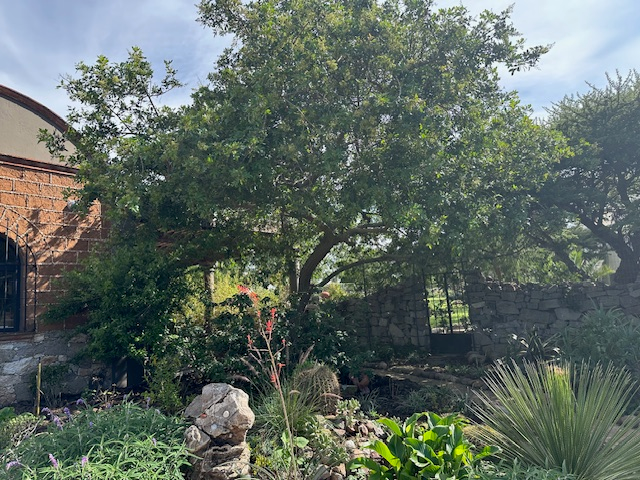
Brazilian pepper creates a shady corner
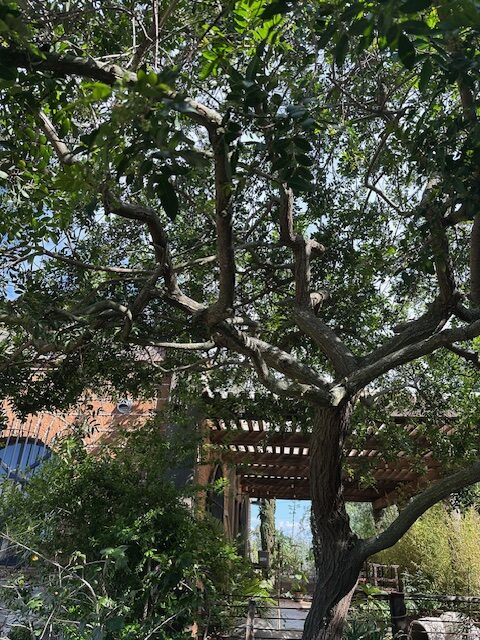
I removed several branches to allow more sunlight to filter through
When I was first looking for shade trees that would grow well in this climate, I came across the Brazilian pepper. It is a native of tropical and subtropical South America, but has become a serious problem outside of its native range. Many places have banned it and created eradication programs to remove it, but it doesn’t seem to be a problem here. I noticed that the tree next to my kitchen window looked like a Brazilian pepper. The definitive test: When the leaves are crushed, they smell like turpentine. Sure enough, it was a Brazilian pepper, and a mature one at that! These trees grow twenty to thirty feet tall and fifteen or so feet wide. They cast a very dense shade ( I thinned mine) and have wonderful twisty, sculptural branches. I can see where they could become a problem because I do find little volunteers popping up. But I think they need water to get started when young, and that’s not going to happen in the desert. When they are flowering, I can hear the bees from all the way across the garden–they love the flowers! I never–and I mean NEVER–have watered this tree. It does not care.
- Olive Tree (Olea europaea)
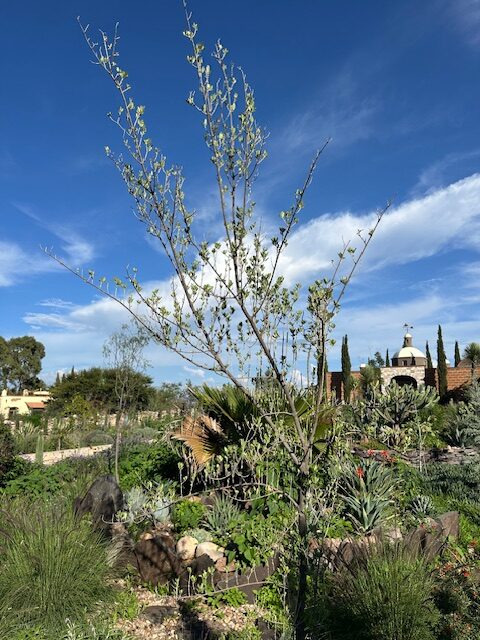
ornamental olive
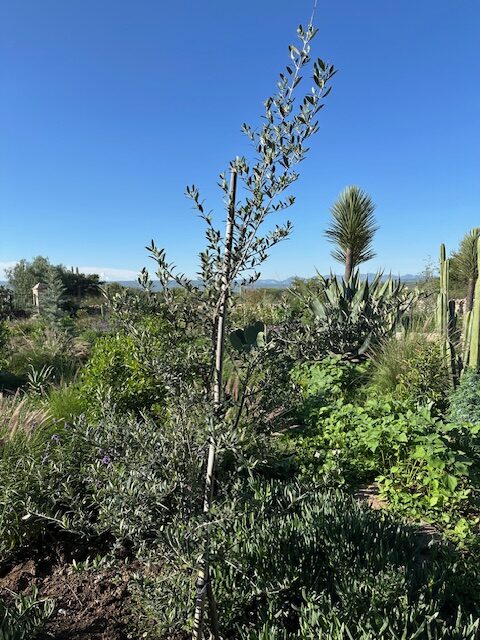
fruiting olive
There are several different varieties of olive trees grown in Mexico. I have five trees, from three different nurseries. Three are ornamental (no fruit), and two are supposed to produce black olives (none yet). I planted these trees in full sun and watered them daily for a couple weeks. Now, I only water every two-three weeks during very hot spells. Three years later, they have only grown about six inches, but other than that they seem fine (olive trees are known to be slow growing).
5. Jacaranda (Jacaranda mimosifolia)
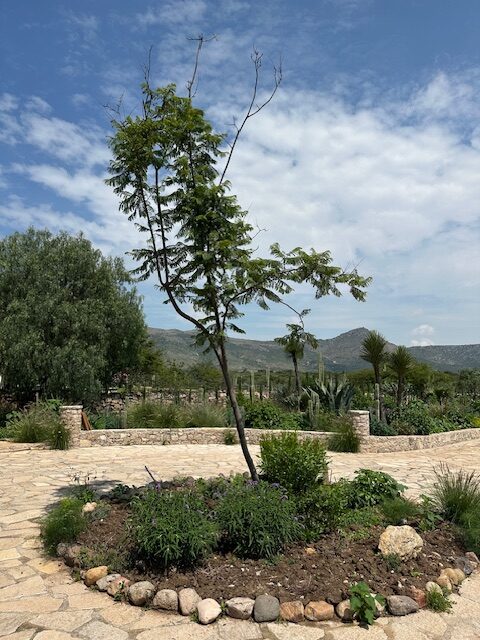
jacaranda in my driveway
Also known as the blue jacaranda, this subtropical tree is found in many countries worldwide and is very common here. It’s extremely heat and drought tolerant, and when it blooms in the spring it is one of the loveliest things you will ever see. It can mature at sixty to one hundred feet tall, and is said to have a life expectancy of about 50 years, but there are many known to be over a hundred years old. They cast a beautiful dappled shade. I removed a broken fountain in my front circular driveway and planted a jacaranda in its place. It’s just beginning to get settled (after three years) and every spring it produces more blooms than the previous spring.
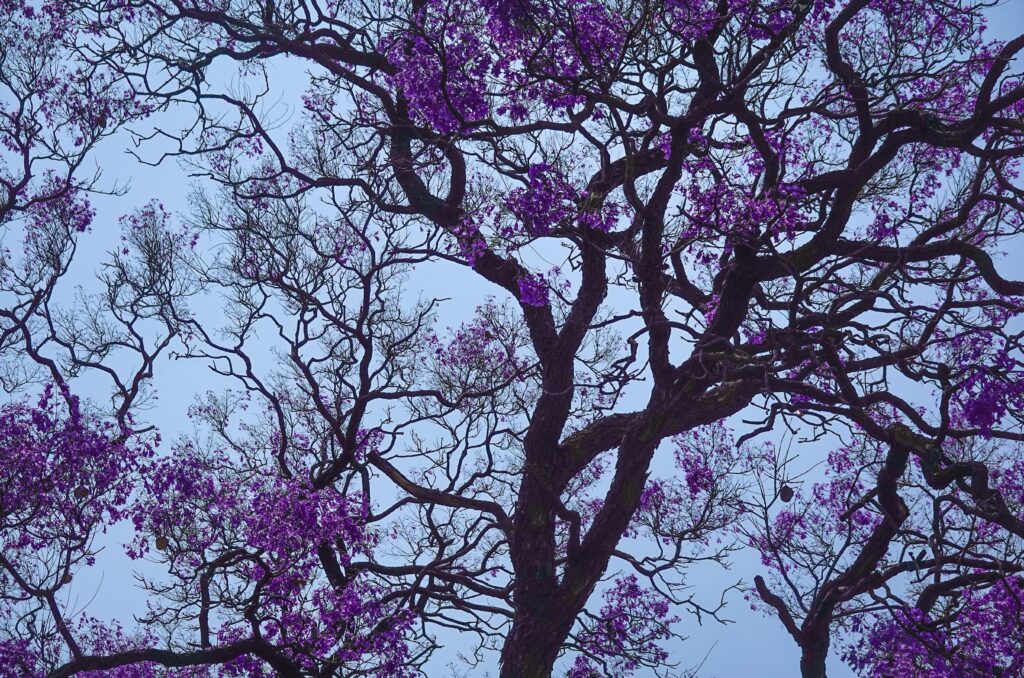
one day, I hope my tree looks like this!
6. Silver Dollar Eucalyptus (Eucalyptus cinerea)
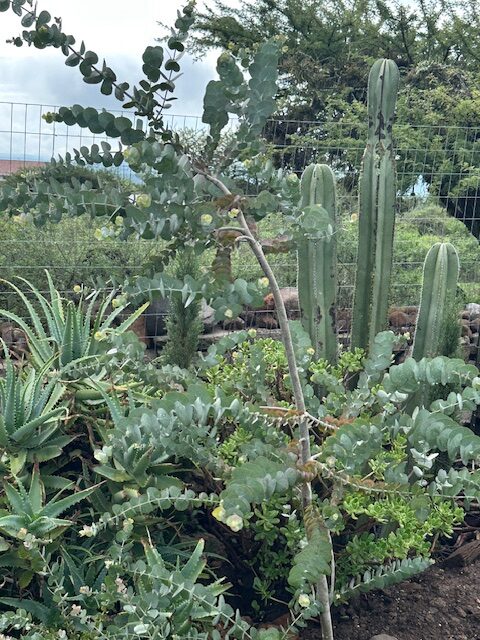
my baby silver dollar
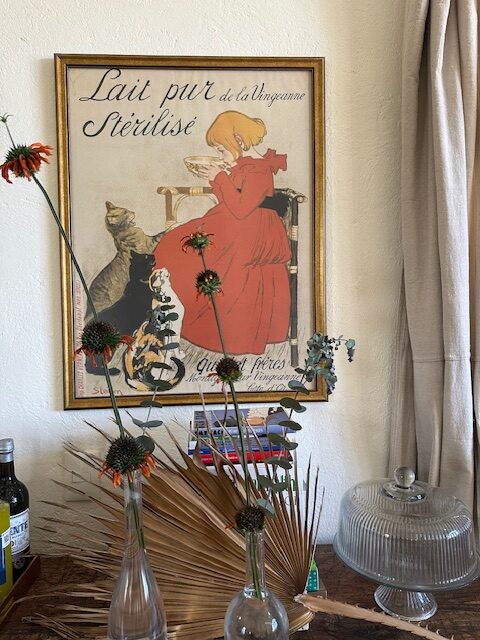
silver dollar stems with orange lion’s tail
There are more than 700 species of eucalyptus (or gum trees, as they are commonly known– remember that song? Kookaburra sits in the old gum tree, merry, merry king of the bush is he…) but only a few grow outside of Australia. I’m no expert at identifying them, but I do know that several species are common in Mexico. My neighbor has one that I’m guessing may be a spotted gum or a blue gum. It’s at least one hundred feet tall and quite majestic. An extended family of ravens have made it their home and raise young every spring. I planted a silver dollar gum in my garden, which is the type that florists like to use in arrangements. They are commonly sold in Mexico. I gave mine water once or twice during the first week or two after planting, then pretty much neglected it. It’s growing well, and doesn’t seem to care if it gets water or not. It’s a very pretty little evergreen tree. Although it is supposed to reach forty to sixty feet in height and twenty to thirty feet in width, it can easily be pruned to stay smaller.
7. Acacia
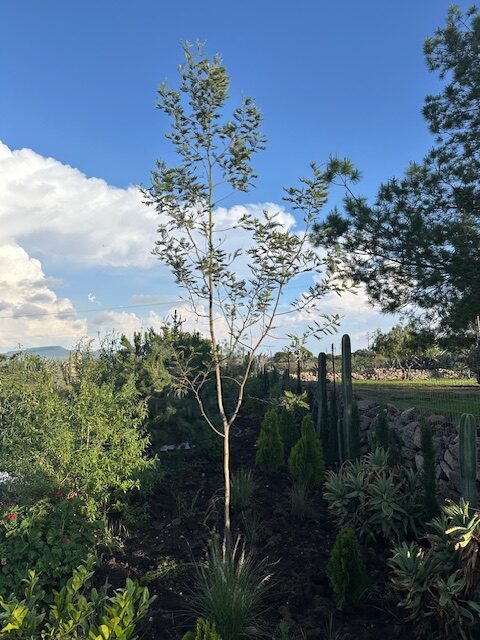
green acacia
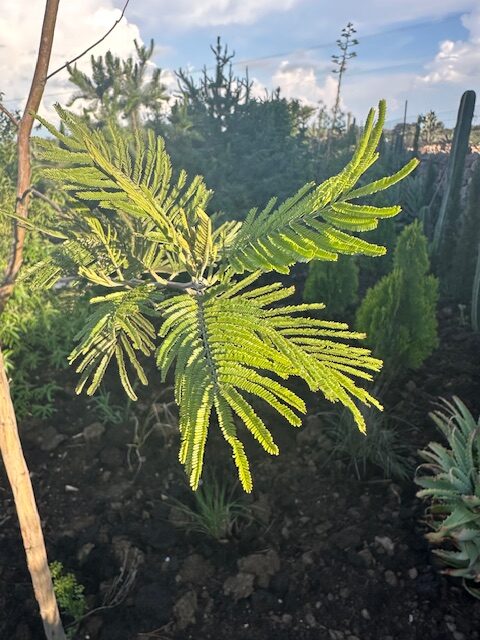
green acacia leaves
These trees are also known as mimosa, thorntree, or wattle. I planted three kinds of these desert trees. Green acacia (Acacia decurrens) (photos above) This may be what I have, based on my research, but I’m not positive. There are many different species and several go by the name ‘green acacia’. Decurrens grows up to forty-five feet tall and ten feet wide. Mine has had very little water and is growing beautifully.
Black acacia (Acacia melanoxylon) These trees grow quite large–forty to fifty feet with a twenty to forty foot spread. I was looking forward to watching this tree grow, but it died after only six months. It was from the same vivero that I have had bad luck with, so I think something could have been wrong with the tree, although it looked healthy.
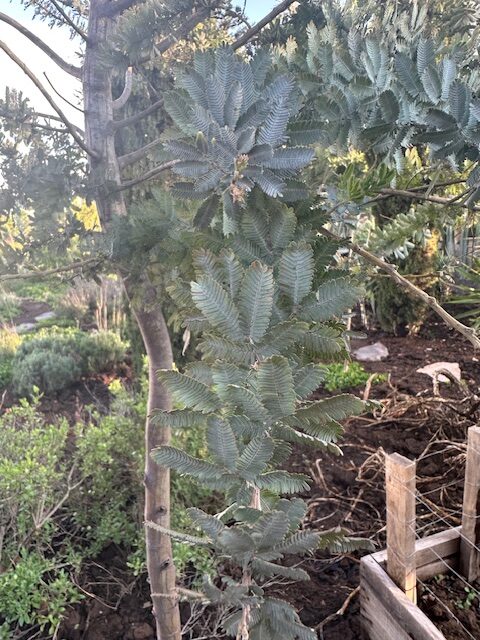
acacia baileyana leaves
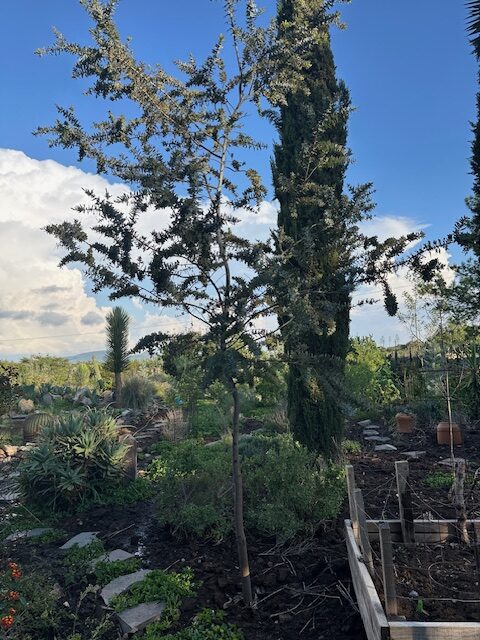
acacia baileyana
Acacia baileyana is the third type of acacia I have tried. I planted a couple with silvery green leaves, and also a couple with purple tinged leaves, which are very pretty and very drought tolerant. In fact, they don’t do well if they get too much water. They are small trees, twenty to thirty feet tall, and twenty to forty feet wide. The only drawback is that their lifespan is only about thirty years.
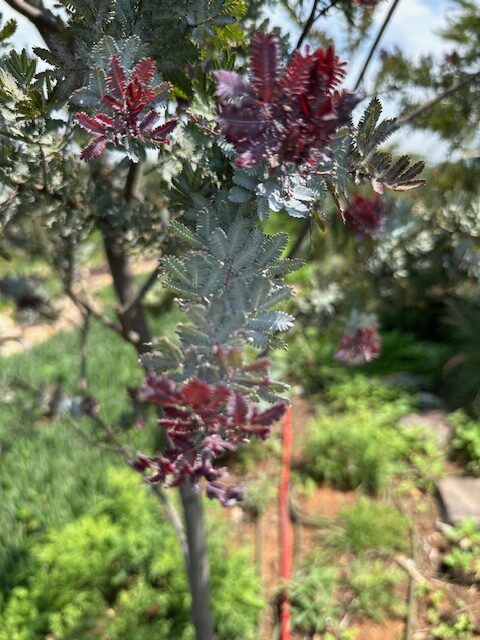
acacia baileyana morado
There are many other types of acacias in different shapes and sizes, but they are all drought tolerant and if I see more varieties at the viveros, I’ll likely give them a try.
8. New Mexico Privet (Forestiera neomexicana)
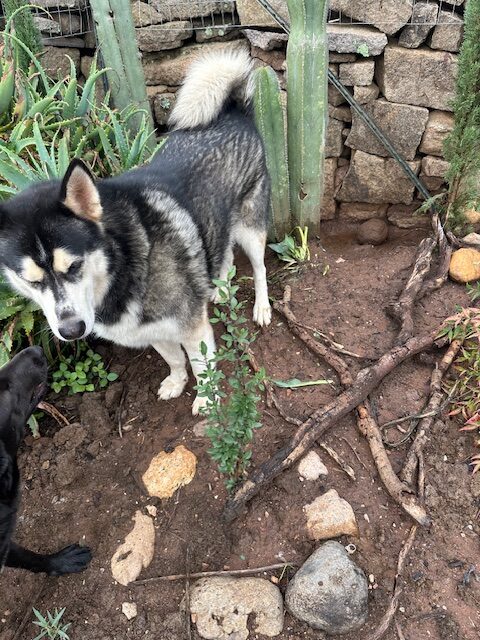
Lorenzo and Stella, with desert olive in foreground
Also known as desert olive, these are fabulous little trees. They only grow twelve to eighteen feet tall and twelve feet wide, but they are great fillers for dry spots. I planted two of these from an Etsy vendor and I actually forgot I had planted them, because they were in a far corner of the back garden in a dry spot. Imagine my surprise when I rediscovered them and they were doing well! When I planted them they were only about six inches tall, and now (about two years later) they are about two and a half feet tall, but with all the rain we are currently having I expect them to really take off. They have a dark blue fruit that birds love, but you need to have a male and a female for fruit, so it’s best to order several. I wanted to plant six of them, but the vendor only had two in stock. I should order some more (The local viveros don’t stock them). These little trees go on the no-brainer list for desert survivors.
9. Honey Locust (Gleditsia tricanthos)
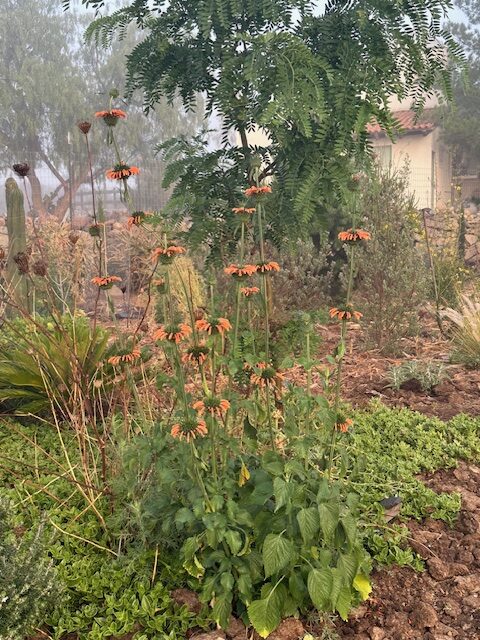
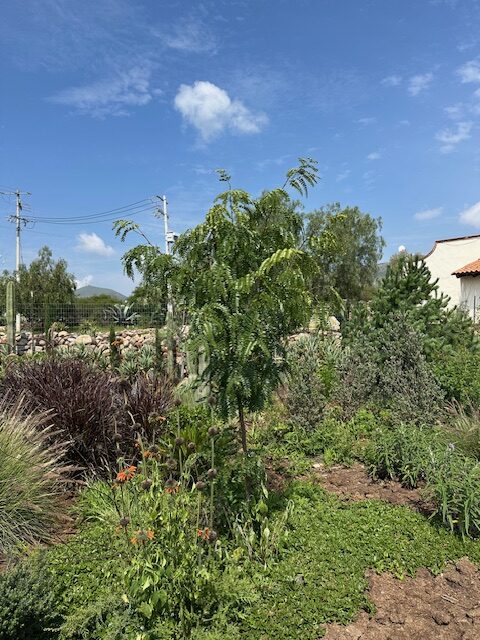
honey locust, Shademaster variety
I wrote about these trees in an earlier post–I have not noticed them locally, but they are native to central and eastern North America. Maybe they are more common in the north of Mexico. At any rate, they just love it here in the high desert! I have about twelve of them and they have not had any problems with minimal water in the two to two and half years they’ve been in the ground. At maturity, they will reach fifty to seventy feet tall and twenty-five to forty feet wide. They are fast growing, and this coming year I expect to see some rapid growth (first year sleep, second year creep, third year leap).
10. Crape Myrtle (Lagerstroemia indica)
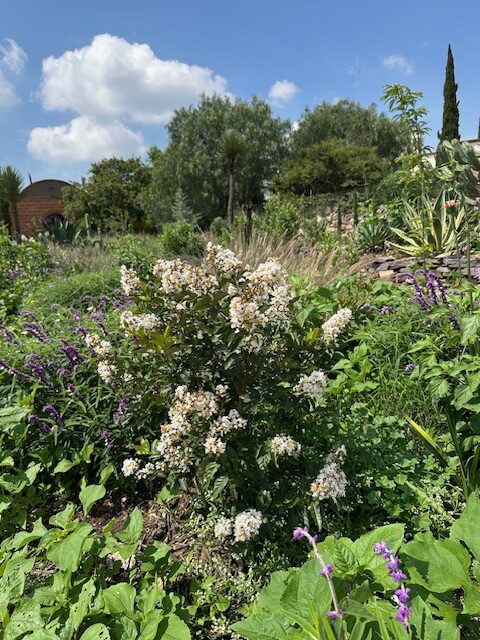
Sarah’s Favorite–this tree is only about three feet now, but will mature at fifteen to twenty-five feet tall and twelve to fifteen feet wide
These trees are very popular in the American South, with good reason. They love hot, dry weather and come in many sizes and blossom colors. Some varieties are loved because of their interesting exfoliating bark. I have seen them in the median strip of a nearby town–a very difficult place to live with the heat of the black asphalt and the pollution. But they are troopers and seem to have no problems. They look well established, about fifteen feet tall.
This tree is stocked in almost every vivero I’ve been to around here, but the problem is, they cannot tell you the variety (an ongoing issue) they only know the flower color. They are known as Astronomica in Mexico. I wanted a specific variety, Sarah’s Favorite, to line my driveway, so I ordered them online. This variety has white blossoms, and peeling cinnamon bark, and the leaves turn a spectacular orange-red in the fall. Mine were very tiny when I planted them, less than a foot tall, and two and a half years later they are six to eight feet tall. None have died, and I only water sporadically.
I also planted a variety with dark burgundy leaves and rose colored blooms, but these seem more delicate than the others, and start to wilt and drop leaves if they aren’t watered at least once a week, so I think it’s best to stick to the green leaved varieties if you don’t plan to water regularly.
11. Huesos de Frailes (Thevetia peruviana)
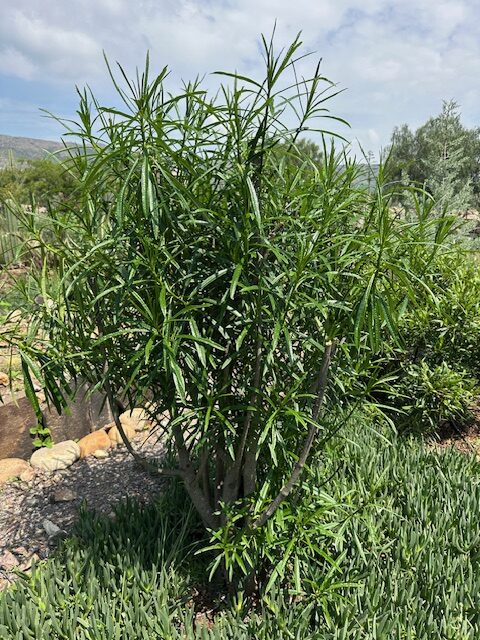
huesos de frailes, not flowering at the moment
The name of this tree means ‘bones of the friar’. They are also known as ayoyote trees, lengua de gato (tongue of the cat) and yellow oleander, among other names. The trumpet shaped flowers are bright yellow. The seedpods are large and are known as Aztec jingles, because they are traditionally dried and attached to strips of leather or cloth and tied around the ankles of dancers, where they make a hollow percussion sound, similar to rain or a rattlesnake. This small tree is super tough and drought tolerant. Not the best tree for shade, as it only grows ten to twenty feet tall at maturity, but it’s good for a spot where a large tree won’t fit. I have two of these trees that were already here when I bought the property. I kept them because they’re pretty, but I probably would not have intentionally planted them because all parts of the tree are very toxic (supposedly, they are popular for suicides in India).
12. Palo Verde
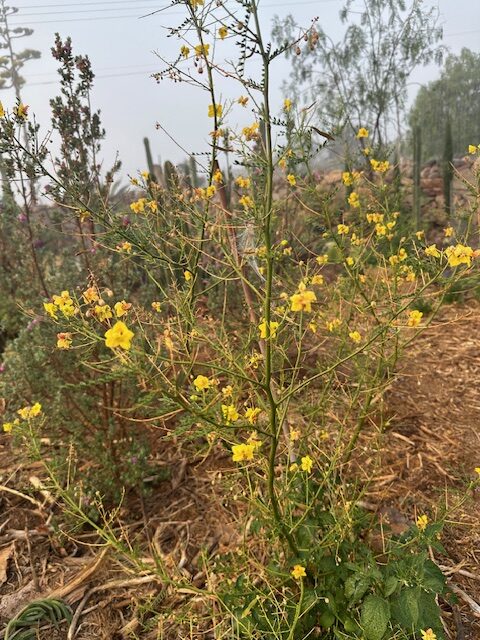
young palo verde, Desert Museum variety
I bought two of these on Etsy. For some reason, despite the fact that they are a perfect tree for desert climates, the viveros here do not stock them. A mystery. The trees I received were about six inches tall. The dogs destroyed one of them (RIP little tree), the other has grown at a rate of two-three feet per year, and has beautiful yellow flowers. After the first couple months, I have given it very little supplemental water–maybe once every two weeks– and it hasn’t minded. The trunk is a lovely green color (palo verde means ‘green stick’ )
13. Liquidamber (Liquidamber styraciflua)
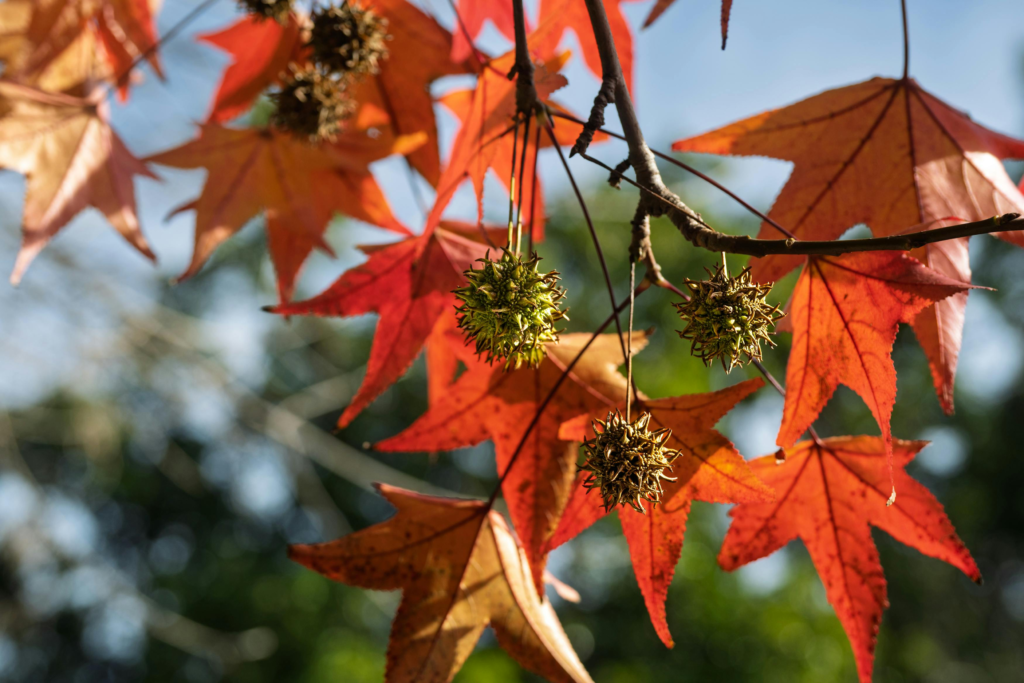
Commonly called sweet gum, these trees can reach sixty to one hundred feet tall and forty to fifty feet wide. Whenever I see one, I am reminded of Piedmont, California, where I lived for almost two decades. Liquidambers line the city streets, and in the fall they turn gorgeous colors of orange, red and yellow. People complain about them because the roots tend to lift the sidewalks, and they also drop spiky round seed balls (called gumballs) but I think these problems are a small price to pay for these beauties.
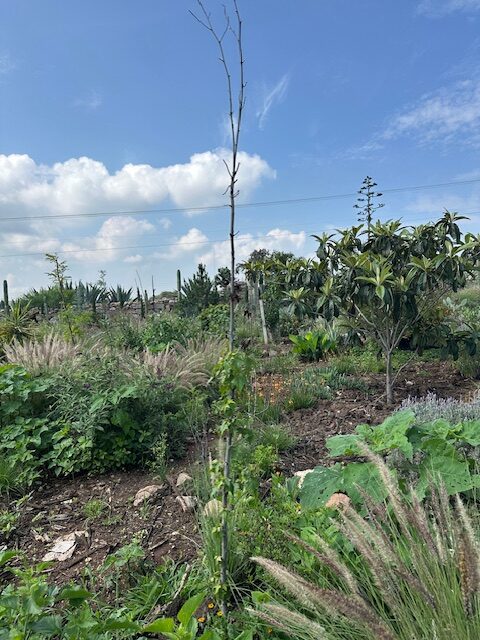
my surviving liquidamber
I haven’t seen them reach their full height in these parts, but in Piedmont, they were huge. I bought two liquidambers from a nearby vivero. One died completely, and the top half of the other one died. I think it’s going to make it now, because it’s been over a year in the ground and is looking good (the bottom half, anyway). I am including these trees in the list because I have seen them growing and thriving locally. The vivero where I bought them does not have the healthiest trees, and I should have bought them from a vivero with a better tree survival rate. Of note: they are prone to iron chlorosis (yellow leaves) in alkaline soil, so I add sulfur powder several times a year to help with iron absorption.
14. Red Maple (Acer rubrum)
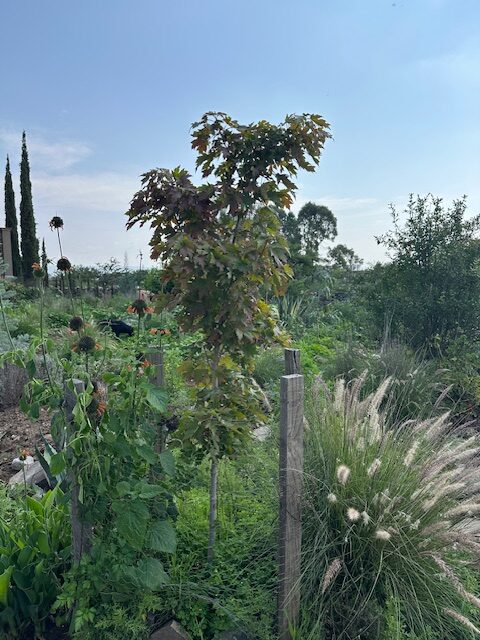
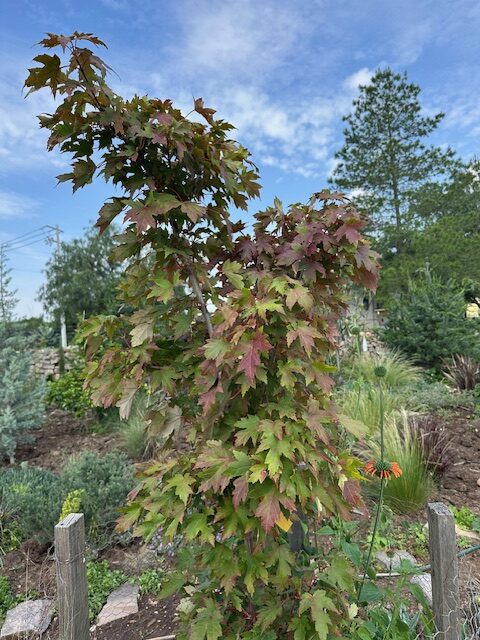
Red maple/scarlet maple is a tree that I have seen locally, but ONLY in viveros, not in actual gardens. I wanted a specific variety (Autumn Blaze) so I ordered one from Fast Growing Trees. I planted it thinking it had a 50/50 chance or less of surviving, but to my amazement, it is doing very well! It has grown rather slowly, about two feet in as many years, but it seems happy with only occasional watering. I do have ground cover planted around it, so that helps shade the roots and retain moisture. And it has such beautiful fall color. It should mature at forty to fifty feet tall and thirty to forty feet wide. I am a sucker for fall color. It’s my favorite time of year, and I miss the East coast falls so much–crunchy apples, back to school, new shoes, cool weather….
15. Gingko

how gorgeous is this? (not mine, sadly)
I have never personally seen a gingko tree in Mexico, but they do exist. In Mexico City (CDMX), in Chapultepec Park they can be seen. In 1964 Japan gifted Mexico five hundred of these trees. At least one gingko can also be seen in Bombilla Park in CDMX. I ordered two of these to try, because I love them so much (and I didn’t yet know about the ones in CDMX) but I absolutely did NOT expect them to do well. As it turns out, they are extremely tough and adaptable trees. The first one I planted, just a standard species from Etsy, was broken in half and dug up by my dogs. I replanted what remained in a different location, and put up a dog proof barricade around it. Two years later it is doing well, and growing. Very slowly, but definitely growing! It’s about one foot tall now, which doesn’t sound exciting, but I am VERY excited that it’s going to live (fingers crossed). In the front garden, I planted another gingko from Fast Growing Trees, a variety called Princeton Sentry. It was maybe five feet when it arrived, and now it’s about six feet. They have both tolerated the heat and drought like champs. After the first six months, I only watered them every seven to ten days, and after this rainy season ends, I will only water them every two to three weeks. These are just gorgeous trees, and the fastigiata (skinny) varieties are perfect if you only have a bit of space.
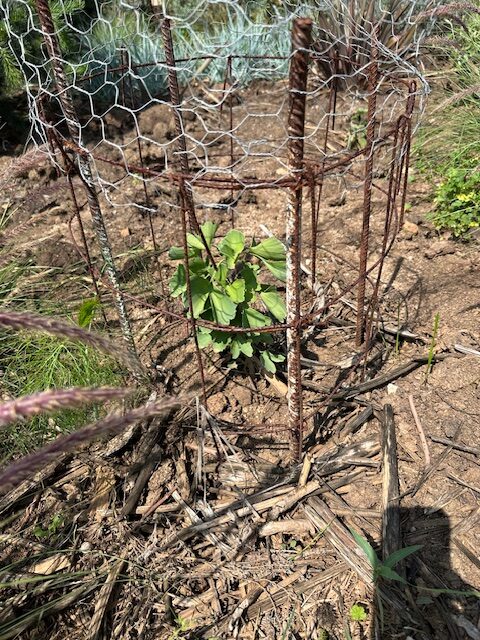
my tiny gingko
16. Elm (Ulmus parvifolia)
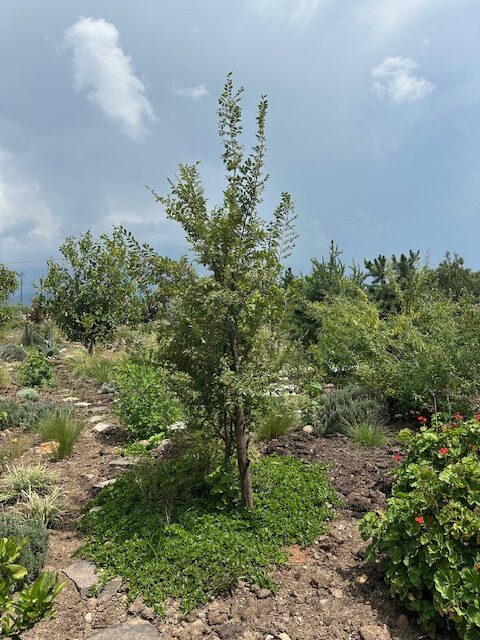
elm, Emerald Flair
When I saw photos of the beautiful fall color of the variety called “Emerald Flair” (aka JFS Barrett), I had to order one. I wasn’t sure what to expect, but it has proven to be very tough. It has never wilted or looked subpar, even during extreme heat. It looks like it’s going to be a survivor, but I won’t get my hopes up too high until at least two more years have passed. However–things are looking very good after about eighteen months. I most likely have the ONLY one of these in central Mexico.
17. Hackberry (Celtis occidentalis)
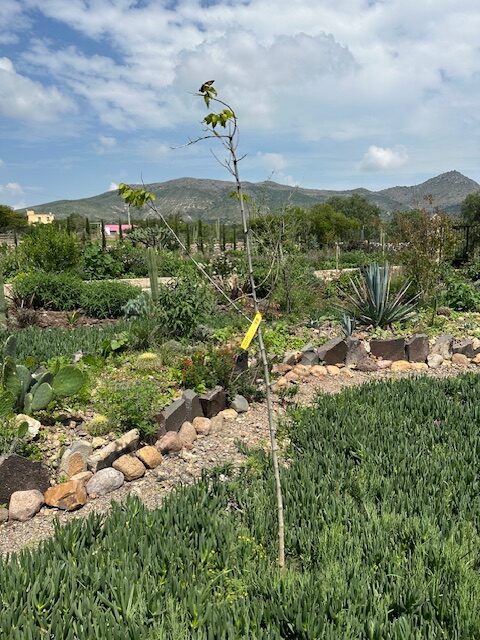
This tree is native to parts of the USA, and grows on average forty to sixty feet. They are supposed to be resistant to drought, heat and pollution, and tolerate a variety of soils, so I thought it would be worth trying one. (There are other species of hackberry that grow in Mexico, Celtis ehrenbergiana, aka the desert hackberry, and Celtis laevigata, which grows in the northeast of Mexico, but I couldn’t find either of those species) The one I planted a year ago (Celtis occidentalis) came through our very hot and dry summer without problems. I did water every four to five days, so I’m not sure how it will fare when I water less after the rainy season. The hackberry produces (as you may have guessed) berries, which are not only eaten by birds and other wildlife, but humans as well. Caches of (presumably petrified) hackberries have been found in ancient cave dwelling sites. People today make hackberry milk by combining the berries with water in a blender. If this tree survives, and produces berries (it is self-pollinating), I plan to eat them. Also, the hackberry tree is supposed to provide protection from evil spirits if you sleep under it, or make an amulet from the wood (if any evil spirits make an appearance, you’ll see me under the hackberry with my sleeping bag).
So there you have it, a list of trees which will (I hope) not be money down the drain. Three other trees which I have not planted (yet) but am almost 100% certain would survive without difficulty are:
Desert Willow
Ironwood
Chinese pistache
I will be planting all three of these in the coming year!


